The phrase "underwater restaurant" does a lot of quiet lying. It conjures somewhere you might stroll into for dinner, when in reality the Maldives has only a handful of these rooms — five or six, depending on how you count — and each one is a single fully-submerged dining capsule that seats between fourteen and twenty people, serves one fixed multi-course menu, and costs several hundred dollars a head. You don't eat at an undersea restaurant so much as book it, once, the way you'd book a dive or a sunset cruise. Understand it as an experience set-menu rather than a place to grab a table, and the marketing stops mattering and the real differences come into focus.
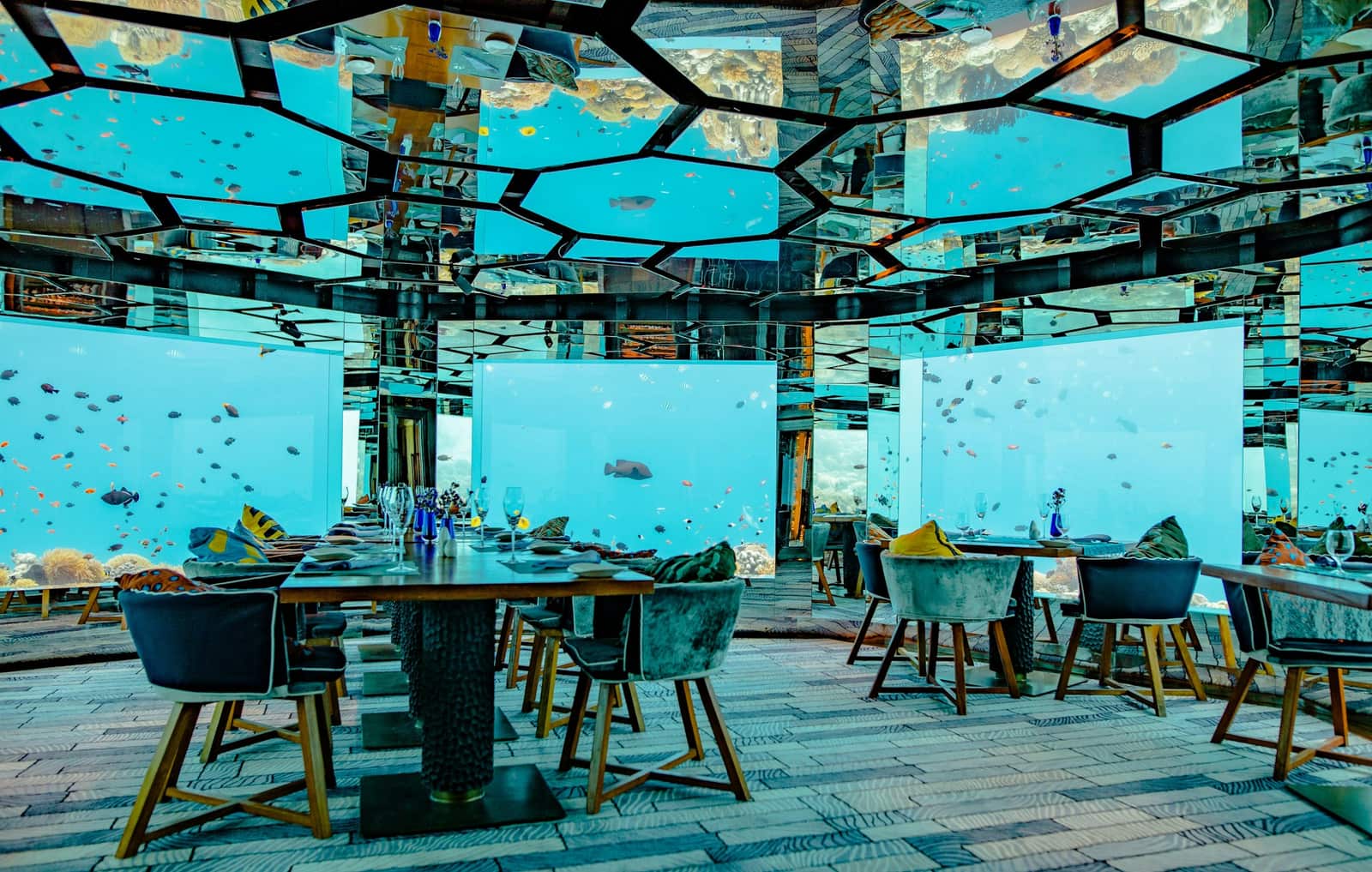
The genre is consistent. You descend a spiral staircase (or take a short boat hop) into a transparent room sitting somewhere between five and six metres below the surface, with the reef and its traffic — fusiliers, the occasional ray, sometimes a reef shark — moving past on the other side of the wall. And here is the first honest correction the brochures won't volunteer: these rooms are marketed as "all-glass," but the load-bearing transparent material is thick cast acrylic, not glass. That's not a downgrade. Acrylic is precisely what lets a structure curve into a seamless dome and hold back the weight of the ocean — glass at that scale and shape couldn't. It's just worth saying plainly, because almost no one does.
The originals: Ithaa, the first — and 5.8, the largest
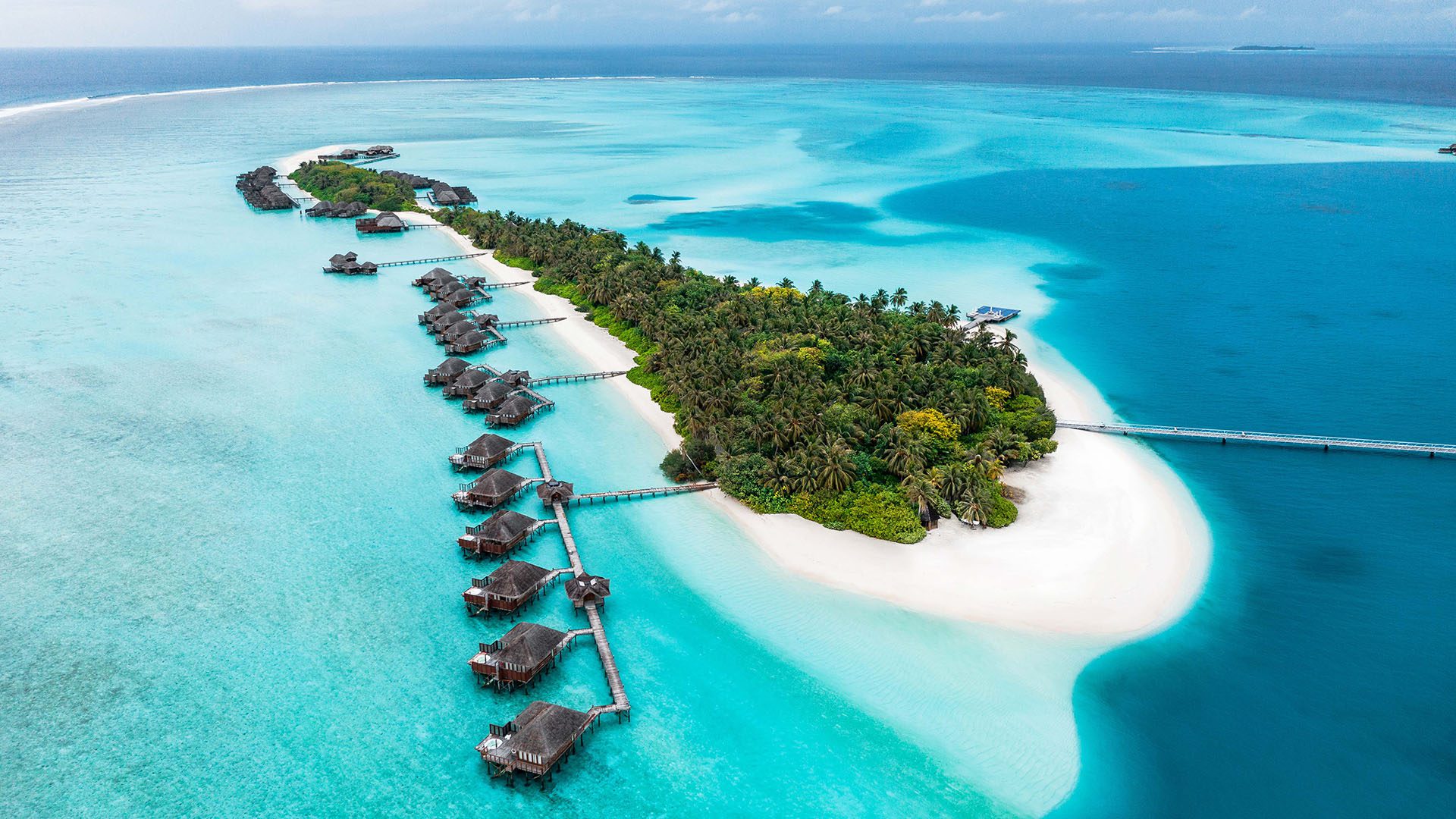
Ithaa, at Conrad Maldives Rangali Island in South Ari Atoll, is where all of this started. It opened in April 2005, sits about five metres down, seats just fourteen, and curves its R-Cast acrylic shell into a panoramic — roughly 270-degree — view of the reef. The name means "mother of pearl" in Dhivehi. It is genuinely a first, but the precise claim matters: Ithaa is the world's first all-glass (all-acrylic) undersea restaurant, not the first underwater restaurant full stop. The Red Sea Star in Eilat predates it by seven years. Competitors routinely drop the qualifier and get it wrong; the qualifier is the whole truth. One more honest note: that original acrylic shell was built in Singapore to an estimated twenty-year design life, which the structure reached in the mid-2020s — a tasteful thing to be aware of, not a reason to stay away.
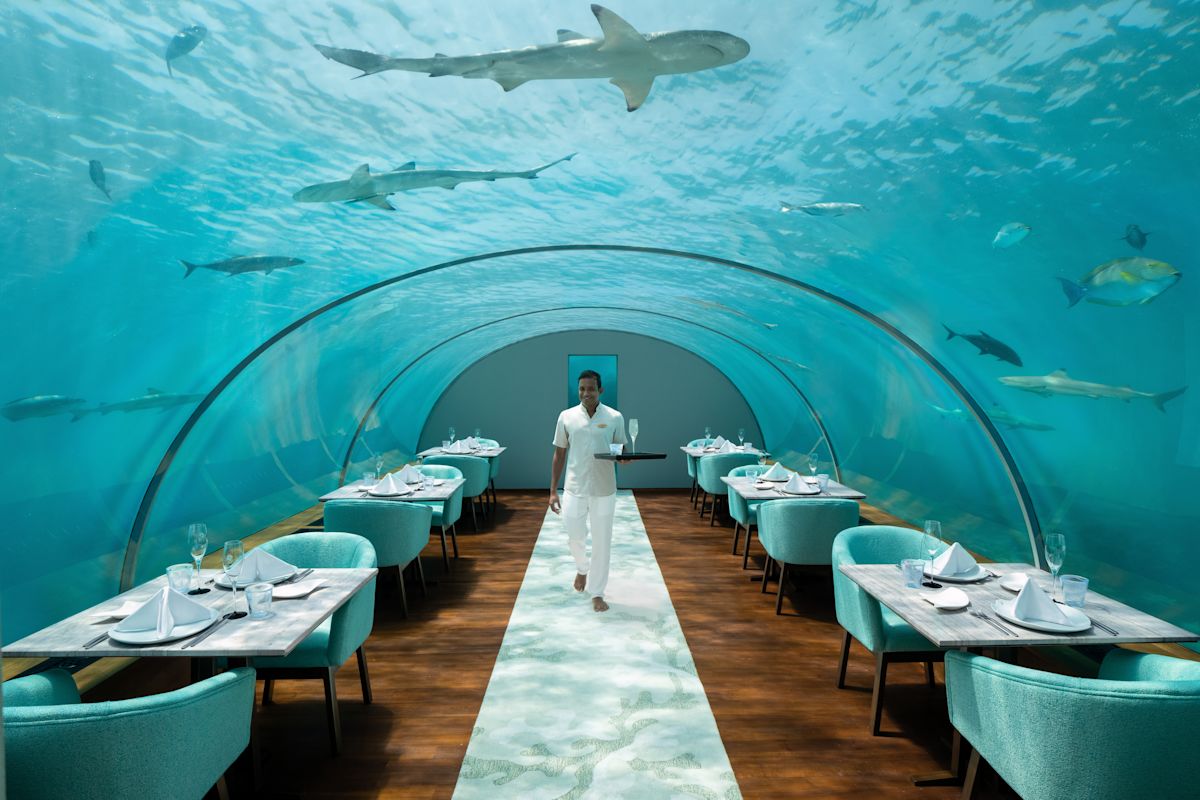
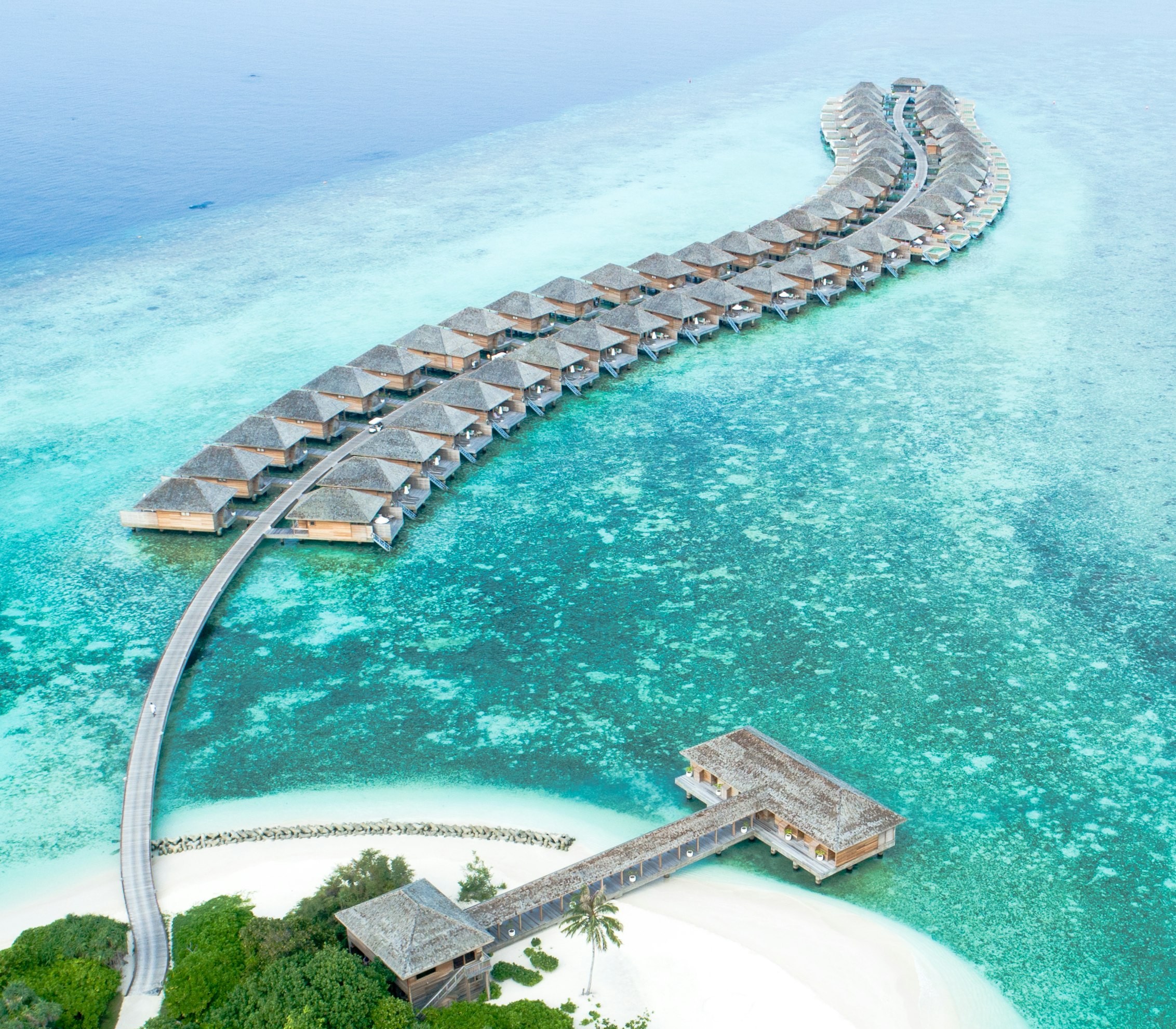
5.8 Undersea, at Hurawalhi Island Resort in Lhaviyani Atoll, is the engineering answer to Ithaa. Opened in late 2016 and named for its depth of 5.8 metres, it's marketed as the world's largest all-glass undersea restaurant, seating up to around twenty guests — no more than ten couples — across some ninety square metres. The build story is the genuinely impressive part: the acrylic was manufactured in New Zealand, shipped in one piece weighing roughly 400 tonnes, and lowered into place by crane. If Ithaa is the intimate original, 5.8 is the bigger, more open room with the better light — and lunch sittings, here as everywhere, get the clearest water and the best of it.
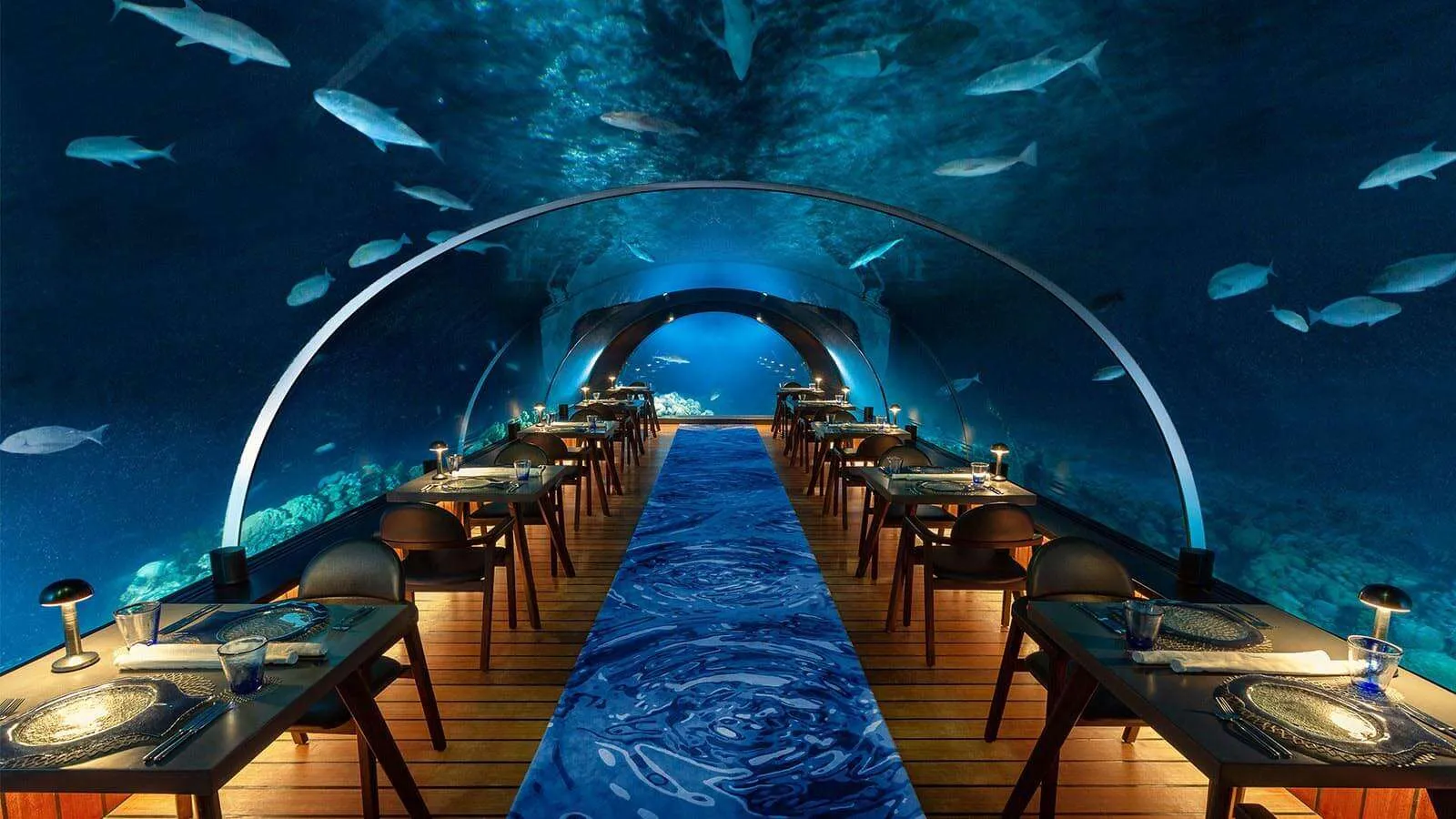
You don't eat at an undersea restaurant so much as book it — once — the way you'd book a dive or a sunset cruise.
Beyond the headliners: SEA, Subsix and M6m
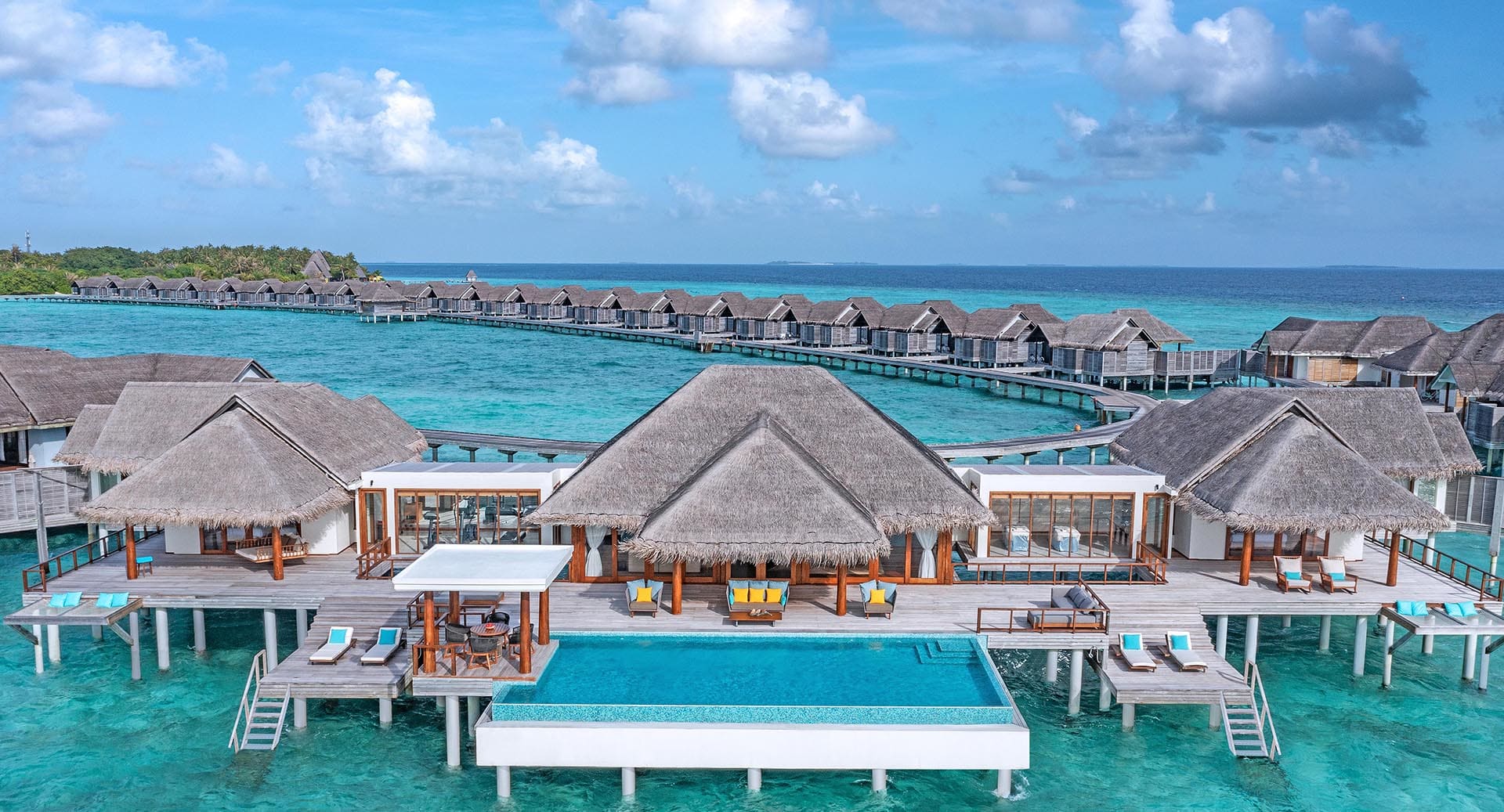
The other three each have a distinct reason to exist. SEA, at Anantara Kihavah in the UNESCO-listed Baa Atoll, sits six metres down and is the gourmet pick — it pairs the dining room with an underwater wine cellar holding more than 450 bottles from around two dozen countries, which is the kind of detail that separates a serious wine list from a token one. Subsix, at Niyama Private Islands in Dhaalu Atoll, is the playful outlier: six metres down and reached by boat about 500 metres offshore, it opened in 2012 as the world's first underwater nightclub and has since pivoted to a daytime Nikkei — Japanese-Peruvian — five-course tasting menu. Anyone still describing it as a nightclub is working from an old press kit. And M6m, or "Minus 6 Metres," at OZEN LIFE MAADHOO in South Malé Atoll, is the value story — six metres down and, crucially, the one undersea restaurant folded into a resort's all-inclusive plan, so in-house guests pay no separate per-head fee.
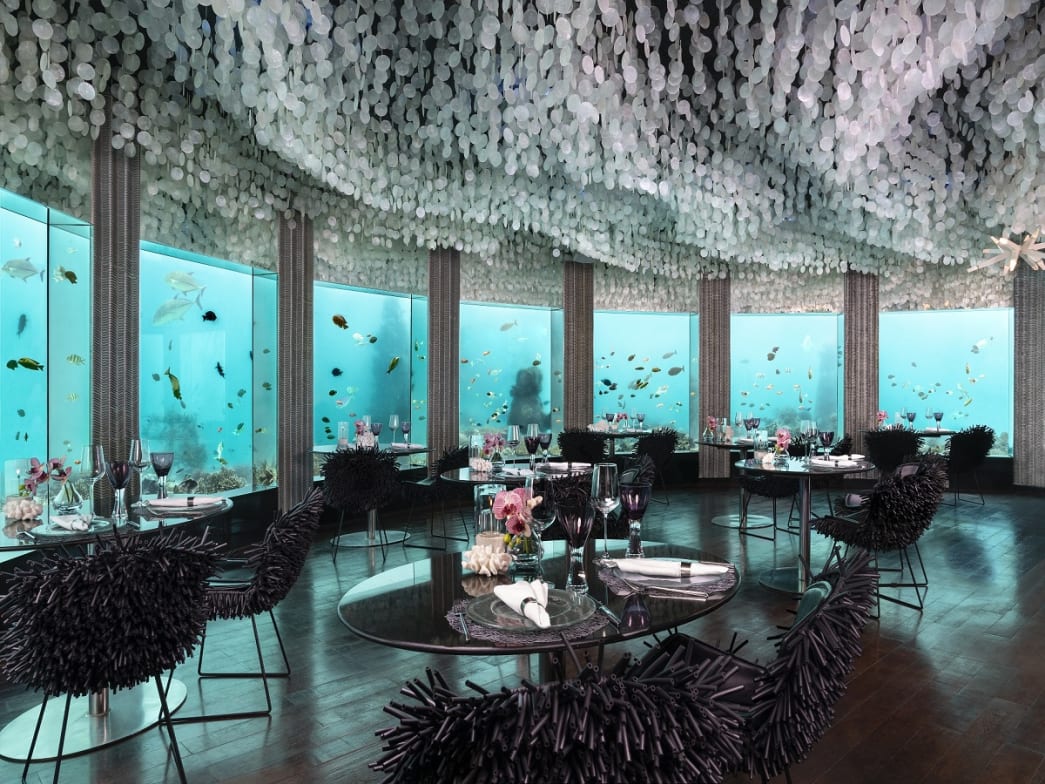
Which leaves the question of which is "best," and the honest answer is that it rotates. The World Travel Awards' "World's Leading Underwater Restaurant" title has passed between these venues year by year: SEA at Anantara Kihavah took it in 2015, 2016, 2017, 2018 and again in 2021; Ithaa won in 2019; and 5.8 at Hurawalhi won in 2020. So "best" isn't a fixed crown — it depends on the year and, more usefully, on what you actually value: intimacy, scale, wine or budget.
What it costs, and which one suits you
This is a splurge, and the pricing deserves to be stated without false precision. Every venue is set-menu only, with dinner pricier than lunch, and the quoted figures almost always exclude the standard 10% service charge and roughly 12–16% in government taxes — budget for that on top. As an indication rather than a fixed price list: 5.8 runs somewhere around USD 225–250 for lunch and USD 280–315 for dinner; Ithaa is the most expensive, with dinner reported in the several-hundred range, up towards USD 490; Subsix's Nikkei tasting sits around USD 250 net. M6m has no standalone price precisely because it's baked into OZEN Life Maadhoo's all-inclusive plan. Anyone publishing exact figures to the cent is guessing — these move with season and menu.
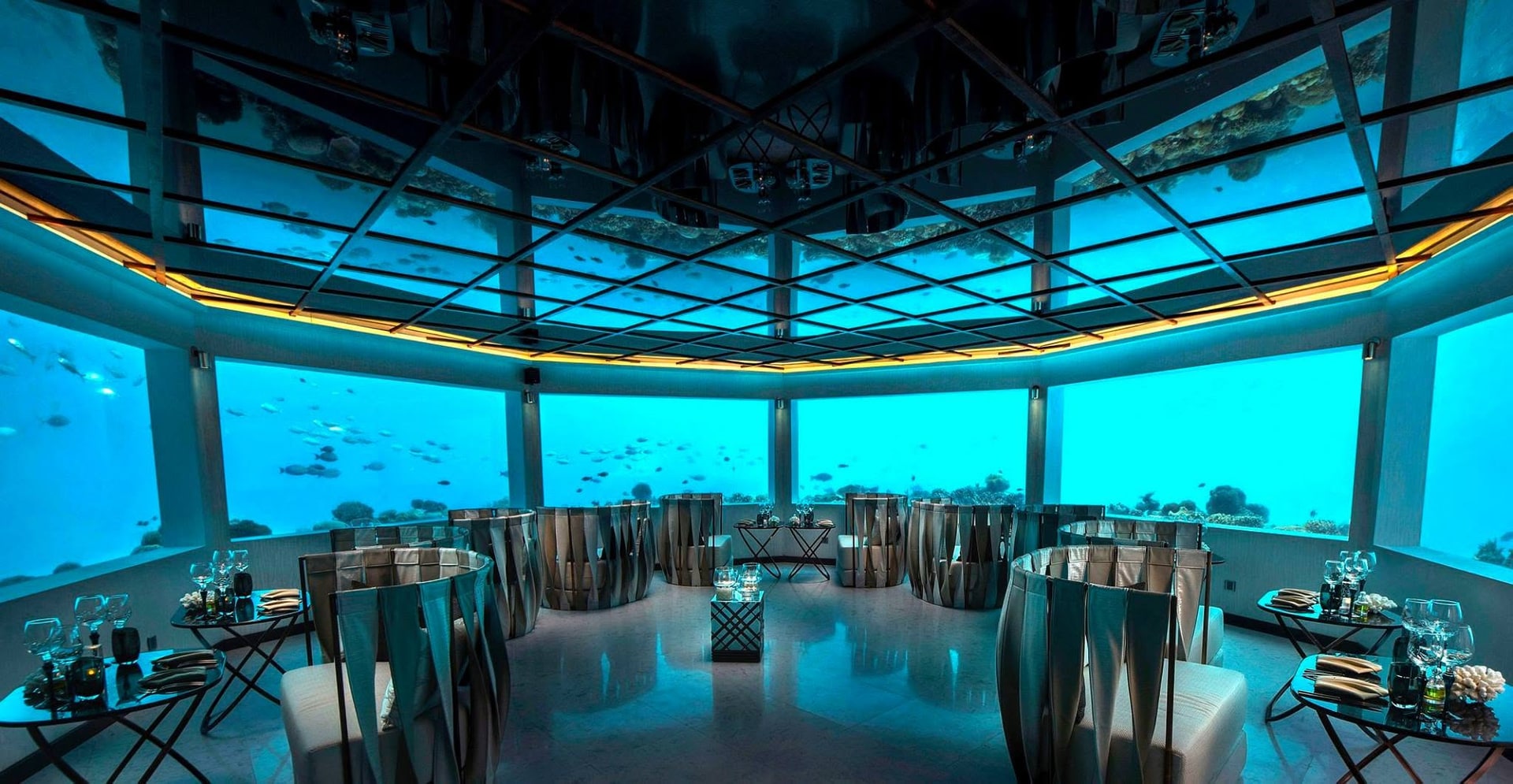
So, plainly: for the most intimate, go to Ithaa — fourteen seats and the romance of the original. For the best engineering and the most open view, 5.8. For wine and a genuinely gourmet evening, SEA. For something playful and a little different, Subsix. And for value, M6m, because it's the only one that won't appear as a separate line on your bill. Two caveats hold across all of them. You're paying for the room and the reef, not menu choice — there's no à la carte, only the set sitting. And the view is at the mercy of weather, time of day and water clarity; a grey, churned-up afternoon at six metres is not the turquoise shot that sold you, which is one more reason to take the lunch slot. Go in understanding that, and it's one of the few "experiences" in the Maldives that lives up to the photograph.
All five of these rooms sit beneath genuinely standout resorts — Conrad Rangali, Hurawalhi, Anantara Kihavah, Niyama and OZEN Life Maadhoo — and your real decision isn't which capsule to eat in but which island to base a whole trip on. Our pick of the best Maldives resorts is where to start that part of the planning.