Maldives Travel Guide

Best Time to Visit the Maldives

Month-by-month weather, seasons, marine life, pricing, and the best time for every activity. There is no bad time to visit the Maldives — only different trade-offs.

Updated March 2026
Year-round
Warm Weather
28–30°C
Sea Temperature
Feb
Driest Month
In this guide

When to Visit the Maldives

The Maldives sits just north of the equator and stays warm year-round, with air temperatures between 27 and 31 degrees Celsius and sea temperatures rarely dropping below 27 degrees. Two monsoon seasons shape the year: the dry northeast monsoon (iruvai) from December to April, and the wet southwest monsoon (hulhangu) from May to November.

The dry season offers the best weather — clear skies, calm seas, low humidity, and just 5–6 rainy days per month. This is peak season, with the highest prices and occupancy. The wet season brings lower prices (30–60% below peak), fewer crowds, brief tropical showers, and richer marine life including manta ray aggregations and whale shark sightings.

There is no bad time to visit the Maldives. Every month offers warm water, swimmable seas, and the core resort experience. The question is not whether to go, but what trade-offs matter most to you: pristine weather versus lower prices, calm seas versus better marine life, exclusivity versus availability. Southern atolls generally receive more rainfall than northern atolls throughout the year.

Maldives Weather by Month

Every month at a glance — temperature, rainfall, sea conditions, crowd levels, pricing tier, and what makes each month unique for travellers.

Rating Best for Temp Rainfall Crowds Pricing
Jan Best Peak conditions, diving 30°C / 28° 75 mm
High
$$$$
Peak
Feb Best Driest month, honeymoons 31°C / 28° 47 mm
Highest
$$$$
Peak
Mar Best Best visibility, photography 31°C / 29° 50 mm
High
$$$
High
Apr Great Hottest month, last dry weeks 32°C / 30° 100 mm
Medium
$$
Shoulder
May Good Manta season begins, budget deals 31°C / 29° 216 mm
Low
$
Low
Jun Good Surfing season peak 30°C / 29° 170 mm
Lowest
$
Low
Jul Good Summer holidays, mantas 30°C / 28° 150 mm
Low-Med
$
Low
Aug Mixed Whale sharks, summer deals 30°C / 28° 175 mm
Medium
$
Low
Sep Mixed Best value, bioluminescence 30°C / 28° 243 mm
Low
$
Lowest
Oct Good Turtle nesting, transition 30°C / 28° 210 mm
Low
$
Low
Nov Good Monsoon shift, early deals 30°C / 28° 190 mm
Low-Med
$$
Shoulder
Dec Great Festive season, dry weather 30°C / 28° 75 mm
High
$$$$
Peak
Rainfall
millimetres per month
75
47
50
100
216
170
150
175
243
210
190
75
JanFebMarAprMayJunJulAugSepOctNovDec
Air Temperature
degrees Celsius
30°C
31°C
31°C
32°C
31°C
30°C
30°C
30°C
30°C
30°C
30°C
30°C
JanFebMarAprMayJunJulAugSepOctNovDec
Rainy Days
days per month
6
5
6
8
10
11
11
12
16
14
13
9
JanFebMarAprMayJunJulAugSepOctNovDec
Crowd Levels
relative occupancy
High
Highest
High
Medium
Low
Lowest
Low-Med
Medium
Low
Low
Low-Med
High
JanFebMarAprMayJunJulAugSepOctNovDec
Pricing
tier relative to peak
$$$$
$$$$
$$$
$$
$
$
$
$
$
$
$$
$$$$
JanFebMarAprMayJunJulAugSepOctNovDec
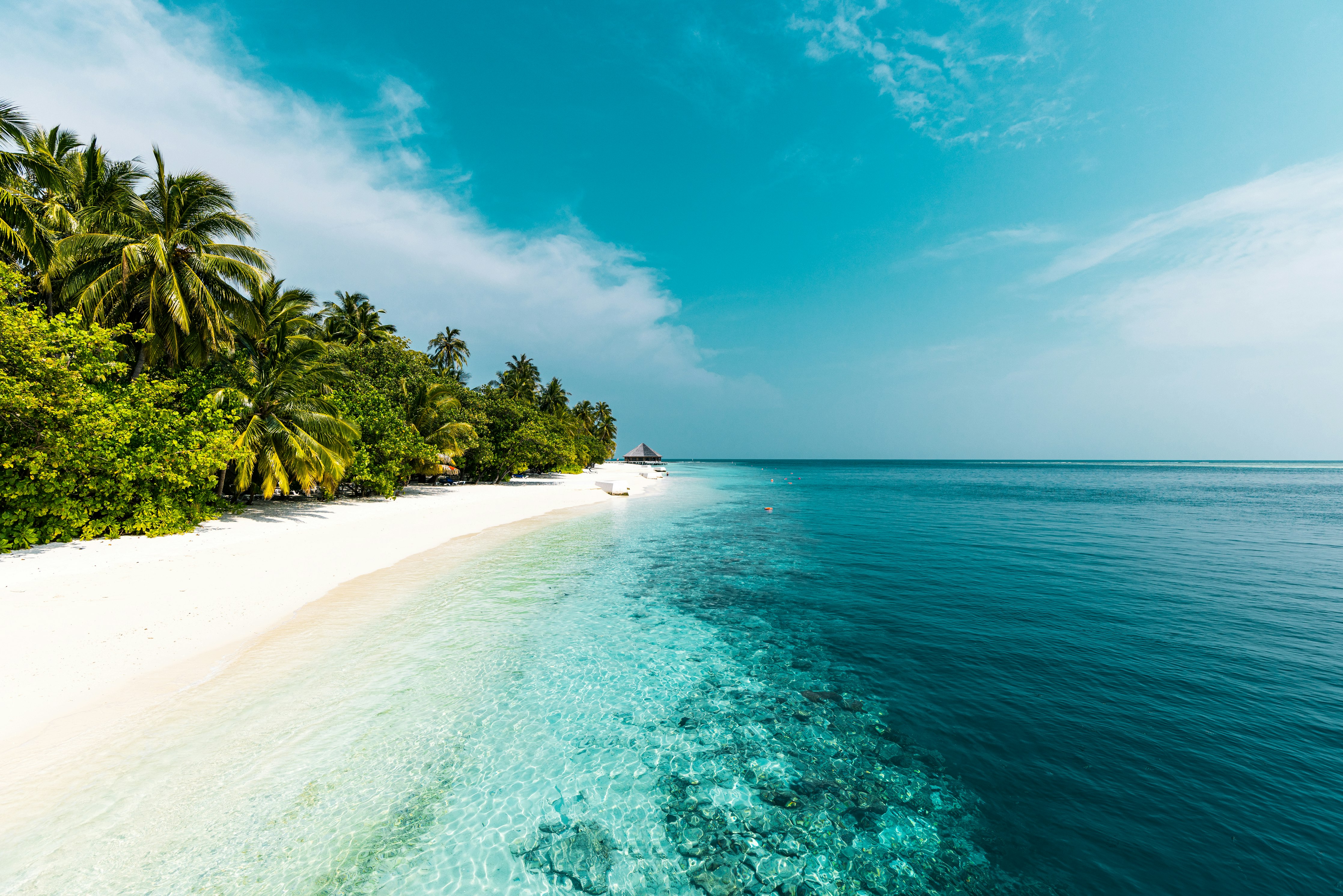
Maldives beach with turquoise water under clear skies

Dry Season vs Wet Season

The Maldives has two distinct monsoon seasons. Understanding each helps you pick the right months for your priorities.

Jan
Feb
Mar
Apr
May
Jun
Jul
Aug
Sep
Oct
Nov
Dec
Peak Season
Holiday Premium
December 20 – January 10
Weather
  • Guaranteed sunshine and calm seas
  • Best festive atmosphere of the year
Pricing & Booking
  • +50–100% surcharges above normal peak rates
  • Minimum 5–7 night stays at most resorts
  • Premium villas sell out first — book 9–12 months ahead
Highlights
  • Compulsory gala dinners (Christmas and New Year)
High Season
Northeast Monsoon (Iruvai)
January – April
Weather
  • Clear skies with 8–10 hours of daily sunshine
  • Only 5–6 rainy days per month on average
  • Calm seas, visibility 25–40 metres underwater
Pricing & Booking
  • Baseline peak rates, highest occupancy (60–80%)
  • Book 6–9 months in advance
Highlights
  • Ideal conditions for diving and water sports
  • Best overall weather of the year
Shoulder Season
Transition Periods
April – May & November
Weather
  • Transitional weather with occasional rain
  • Seas can be choppy during changeover weeks
Pricing & Booking
  • 20–40% savings below peak pricing
  • Moderate crowds (45–60% occupancy)
  • Best overall value for most travellers
Highlights
  • Coral spawning events (Apr–May)
  • Good marine life encounters beginning
Low Season
Southwest Monsoon (Hulhangu)
June – October
Weather
  • Brief showers (30–60 min), not all-day rain
  • Warm water year-round, swimmable every day
Pricing & Booking
  • 30–60% savings below peak season pricing
  • Occupancy drops to 39–45%
  • Common deals: stay 7 pay 5, free transfers
Highlights
  • Best manta ray and whale shark encounters
  • Peak surfing season, bioluminescence

When to See Each Species

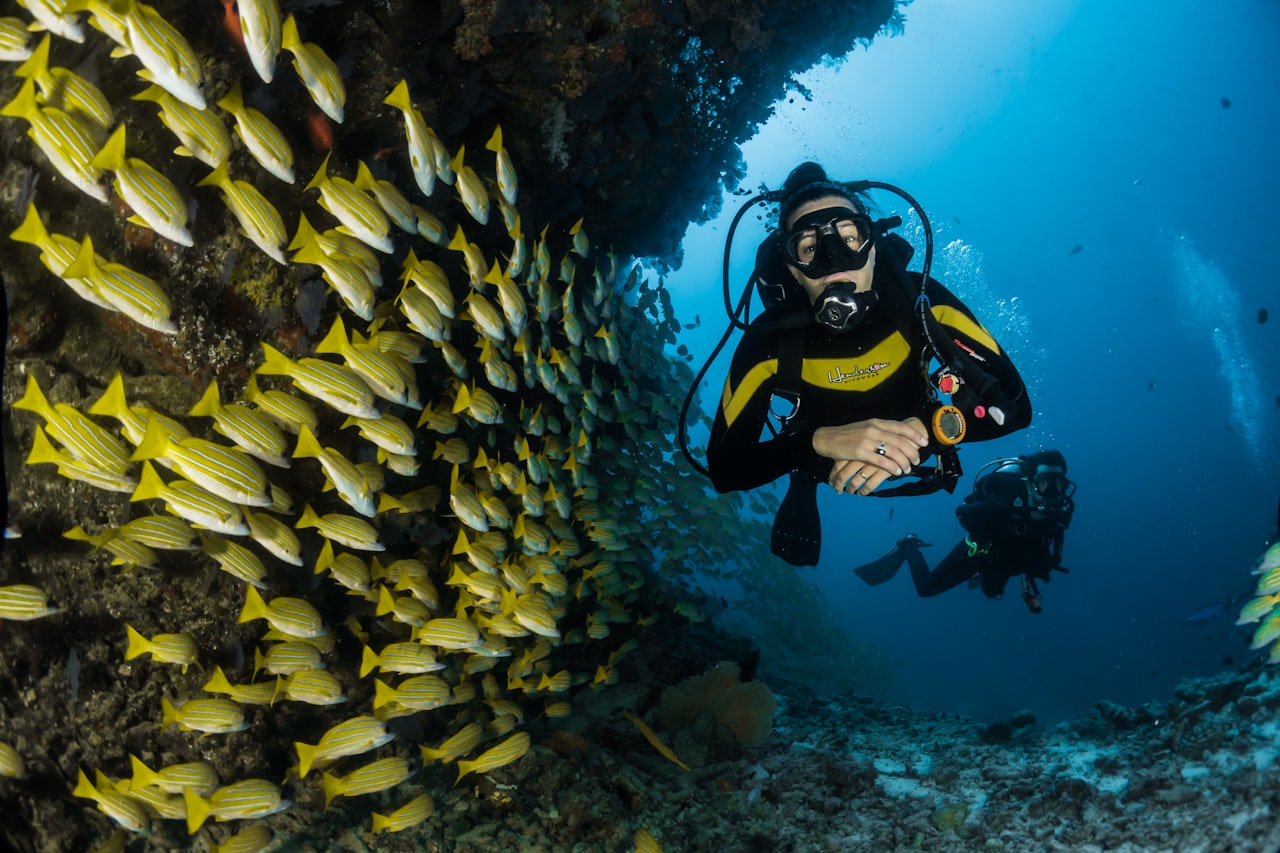
The Maldives is a year-round marine life destination, but different seasons bring different encounters. Here is when to see the most sought-after species.
Whale Sharks
Peak: Aug–Nov
Year-round in South Ari Atoll, May–Nov in Baa Atoll
JanAprJulOctDec
Manta Rays
Peak: Jun–Oct
May–Nov at Hanifaru Bay (peak Jun–Oct), year-round at cleaning stations
JanAprJulOctDec
Sea Turtles
Peak: Jun–Sep
Year-round, nesting peak Jun–Sep
JanAprJulOctDec
Coral Spawning
Peak: Mar–Apr
Mar–May and Oct–Nov
JanAprJulOctDec
Bioluminescence
Peak: Jul–Sep
Jun–Oct, best around new moon
JanAprJulOctDec
Crystal clear ocean water in the Maldives

Maldives Resort Pricing by Season

Prices vary dramatically across the year. Understanding the pricing tiers helps you get the best value for your trip.

Jan Peak
Feb Peak
Mar High
Apr Shoulder
May Low
Jun Low
Jul Low
Aug Low
Sep Lowest
Oct Low
Nov Shoulder
Dec Peak
Holiday Premium
Dec 20 – Jan 10
+50–100% above normal peak rates. Minimum 5–7 night stays required at most resorts. Book 9–12 months in advance. Highest demand period of the year.
Peak Season
January – March
Baseline highest rates. Best weather, highest demand. Full-price meal plans and transfers. Book 6–9 months ahead for best selection.
High Season
December & April
Slight discount from peak rates. December returns to dry weather; April is the last dry month before monsoon transition. Good weather with marginally better pricing.
Shoulder Season
May & November
20–40% below peak pricing. Transitional weather with some rain. Better availability. Many resorts offer meal plan upgrades or transfer deals.
Low Season
June – October
30–60% below peak pricing. Common deals: stay 7 pay 5, free seaplane transfers, complimentary meal plan upgrades, spa credits, and room category upgrades. September offers the lowest rates of the year.

Best Months for Every Activity

Every activity has its ideal window. Match your travel dates to what matters most.

Diving (Visibility)
Best: Jan–Apr
Visibility 20–30m+, calm seas, best for walls and channels
Surfing
Best: Apr–Oct
Southwest swells hit outer atolls; peak Jun–Aug in Male and Laamu
Fishing
Best: Nov–Mar
Calm seas and clear water; peak in January
Photography
Best: Nov–Apr
Golden light, calm water, sunrise and sunset clarity
Snorkeling
Best: Jan–Apr
Clearest water, calm conditions, best reef visibility
Water Sports
Best: Dec–Mar
Flat lagoons ideal for jet skis, parasailing, paddleboarding

Occupancy & Booking Lead Times

Resort occupancy fluctuates from 39% in September to 80% in February. Here is what to expect each month and how far ahead to book.

72% Jan
80% Feb
75% Mar
60% Apr
45% May
40% Jun
42% Jul
44% Aug
39% Sep
43% Oct
55% Nov
68% Dec

Key demand spikes: Chinese New Year (late Jan–mid Feb) drives a surge in bookings at luxury resorts. European school holidays (mid-Feb and Easter) keep occupancy elevated through April. Ramadan timing varies yearly and can shift Middle Eastern travel patterns, sometimes creating unexpected availability windows. Russian and Indian holiday periods also significantly impact specific resort segments.

Recommended Booking Lead Times

Holiday Period
9–12 months
Dec 20 – Jan 10
Peak Season
6–9 months
Jan – Mar
Shoulder Season
3–6 months
Apr – May, Nov
Low Season
1–3 months
Jun – Oct

Seasonal Transfer Considerations

Your season of travel affects how you get from Male airport to your resort. Weather and daylight play a bigger role than most travellers expect.

01
Seaplane Daylight Window

Seaplanes operate only between 6:00 AM and 3:30 PM. If your international flight arrives after 2:00 PM, you will likely need to overnight in Male or at an airport hotel before transferring to your resort the next morning.

02
Wet Season Delays

Seaplane transfers experience more weather-related delays during the southwest monsoon (May–November). Flights may be rescheduled or delayed by 1–3 hours. Build buffer time into your schedule and avoid tight same-day international connections on departure.

03
Speedboat Reliability

Speedboat transfers operate 24 hours and are more weather-resilient than seaplanes. If you are booking during wet season, resorts with speedboat transfers offer more scheduling flexibility and fewer weather disruptions.

04
Book Morning Flights

Aim for international flights arriving before noon in Male. This gives you the best chance of same-day seaplane connections, avoids overnight stays, and lets you arrive at your resort in daylight to enjoy the first evening.

Frequently Asked Questions

When is the best time to visit the Maldives?
The best time to visit the Maldives for weather is December to April, during the northeast monsoon (dry season). You can expect sunny skies, low humidity, calm seas, and only 5–6 rainy days per month. February and March are the driest months with the best visibility for diving and snorkeling. However, the wet season (May–November) offers significantly lower prices, fewer crowds, and better marine life encounters including manta rays and whale sharks.
What is the cheapest month to visit the Maldives?
September is typically the cheapest month to visit the Maldives, with rates 30–60% below peak season prices. Occupancy drops to around 39%, giving you the best negotiating position and widest availability. May and October also offer excellent value. Many resorts run stay-7-pay-5 promotions, include free transfers, or upgrade meal plans during these months. Budget-conscious travellers can save $2,000–$5,000 on a week-long stay by choosing low season.
Is it safe to visit the Maldives during monsoon season?
Yes, the Maldives is safe to visit during monsoon season. The southwest monsoon brings increased rainfall and occasionally rougher seas, but there are no typhoons or hurricanes in the Maldives. Resorts operate year-round with full services. The main considerations are slightly reduced visibility for diving (though marine life is often more abundant), occasional rough seas for boat excursions, and the possibility of overcast days. Water sports and snorkeling remain available throughout.
When is manta ray season in the Maldives?
Manta ray season peaks from May to November in the Maldives, with the largest aggregations at Hanifaru Bay in Baa Atoll from June to November. During peak feeding events, over 100 mantas can gather in a single bay. Manta rays are also seen year-round at cleaning stations throughout the atolls, particularly in South Ari, North Male, and Lhaviyani atolls. The wet season's plankton-rich waters are what drive these spectacular gatherings.
When is whale shark season in the Maldives?
Whale sharks are present year-round in South Ari Atoll, making it the most reliable place on Earth for whale shark encounters. The best sightings in Baa Atoll run from May to November when plankton blooms attract larger numbers. Peak whale shark activity across the Maldives is August through November. Snorkeling (not diving) is the standard way to swim with whale sharks, and encounters are possible on most days with a dedicated excursion.
Does it rain every day in the Maldives wet season?
No. Even in September, the wettest month, you can expect rain on about 16 of 30 days, meaning nearly half the days are dry. On rainy days, showers are typically brief tropical downpours lasting 30–60 minutes, not all-day rain. The Maldives averages 6–8 hours of sunshine per day even during the wet season. Many guests find that the dramatic cloud formations and post-rain clarity actually enhance their experience.
When is the best time to snorkel in the Maldives?
January through April offers the best snorkeling conditions in the Maldives. Underwater visibility reaches 20–30 metres or more, seas are calm, and currents are gentle. That said, snorkeling is excellent year-round thanks to the warm water (27–30 degrees Celsius) and abundant house reefs. The wet season (May–November) has slightly reduced visibility but compensates with more marine life activity, including manta rays and whale sharks near the surface.
Should I visit the Maldives in September?
September is the wettest month with 243mm of rainfall and about 16 rainy days, making it the least ideal for guaranteed sunshine and diving visibility. However, it is also the cheapest month to visit, with rates 30–60% below peak. You will still experience warm temperatures (30 degrees Celsius), swimmable seas, and bioluminescence on dark nights. If budget is your priority and you do not mind occasional rain, September delivers outstanding value. Many repeat visitors deliberately choose September for the savings and solitude.
What is the weather like in the Maldives in December?
December marks the start of the dry season, with rainfall dropping to around 75mm and roughly 9 rainy days. Air temperatures sit at 30 degrees Celsius, sea temperatures at 28 degrees, and humidity decreases noticeably compared to November. The first half of December offers reasonable pricing before the holiday premium kicks in around December 20. From December 20 onwards, expect surcharges of 50–100% and minimum stay requirements of 5–7 nights at most resorts. Overall, December is an excellent month for weather and festive atmosphere.
When should I book my Maldives trip?
Booking lead times depend on your travel season. For the Christmas and New Year period (December 20 to January 10), book 9–12 months ahead as premium villas sell out fast. Peak season travel from January to March should be booked 6–9 months in advance. Shoulder months (April, May, November) need 3–6 months. Low season (June to October) offers the most flexibility and you can often book just 1–3 months ahead, sometimes finding last-minute deals. Booking early always secures better room selection regardless of season.
Is February a good time to visit the Maldives?
February is arguably the single best month for Maldives weather. It is the driest month of the year with just 47mm of rainfall and only 5 rainy days. Seas are calm, underwater visibility peaks at 25–40 metres, and conditions are ideal for diving, snorkeling, and water sports. The trade-off is price and crowds: February has the highest occupancy at around 80%, driven by Chinese New Year and European school holidays. Expect peak-season pricing with little room for negotiation. Book 6–9 months ahead.
What is the rainy season in the Maldives?
The rainy season in the Maldives runs from May to November, coinciding with the southwest monsoon (hulhangu). September is the wettest month with 243mm of rainfall and 16 rainy days, while May and November are transitional with less rain. Rain typically falls in short, intense bursts lasting 30–60 minutes rather than all-day drizzle. The Maldives still averages 6–8 hours of sunshine daily during the rainy season. Southern atolls receive more rainfall than northern atolls. Despite the rain, this season offers the best value, best marine life, and fewest crowds.

Ready to Plan Your Maldives Trip?

Tell us your preferred dates and priorities and we will match you with the right resort — including exclusive seasonal packages and deals.

Start Planning