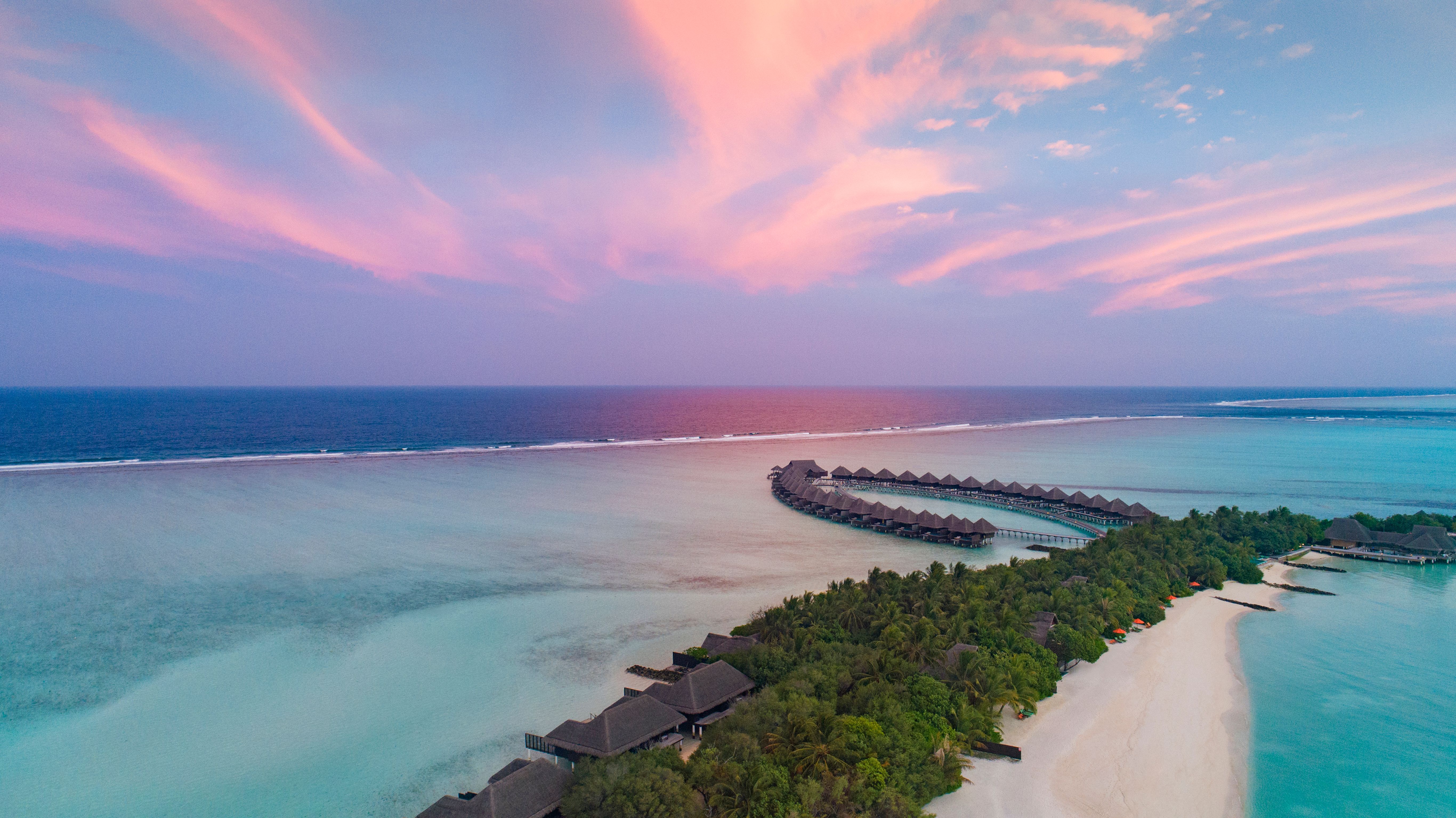
For most of the world the Maldives is a long-haul trip. For India it is barely a short-haul one. A nonstop flight from Kochi or Thiruvananthapuram is in the air for about an hour and a half; from Bengaluru, about two hours; from Mumbai, under three. The clocks barely move either — Malé runs just thirty minutes behind IST. That changes how an Indian traveller can plan the trip, and it changes which of the usual long-haul warnings actually apply.
What follows is the practical version: the entry rules as they stand in 2026, which cities genuinely fly direct and which only look like they do, what flights cost in rupees and when they're cheapest, and the handful of things — food, festivals, money on the ground — that are specific to travelling from India.
Do Indians need a visa for the Maldives?
No — not in advance. Indian passport holders get the same free 30-day tourist visa on arrival as almost every other nationality. There is no India-specific e-visa to buy and no embassy appointment; immigration stamps it at Velana International Airport when you land. The conditions behind the stamp are the standard ones: a machine-readable passport with at least one month of validity, a confirmed return or onward ticket, a confirmed booking at a registered resort, hotel or guesthouse, and enough funds for the stay.
The one piece of paperwork that genuinely needs doing is the IMUGA Traveller Declaration — a free online form on the official Maldives immigration portal, submitted in the 96 hours before you arrive. Every traveller files their own, children included. Several websites offer to "process" it for a fee; the government charges nothing. And if thirty days isn't enough, the visa can be extended before it expires, to a maximum stay of ninety days.
Which Indian cities fly direct to Malé
Nonstop service from India is real but narrower than flight-search pages make it look. As of late 2026, Bengaluru and Mumbai have daily IndiGo nonstops; Kochi has IndiGo and Maldivian; Thiruvananthapuram has Maldivian and IndiGo; and Delhi has a daily Air India nonstop of about four hours. Hyderabad gets a seasonal winter nonstop. Chennai has none — every Chennai option connects somewhere — so treat any page promising "direct flights from Chennai" with suspicion.
From everywhere else, and often from the nonstop cities too, the cheapest fares are one-stop — SriLankan via Colombo, or IndiGo connecting through one of its Indian hubs. Schedules on these routes change with every season, so check the airline before you commit to a day. One newer option is worth knowing if your resort is in the far north: Hanimaadhoo, the upgraded airport in Haa Dhaalu Atoll, has Maldivian flights from Thiruvananthapuram twice a week, which can spare you the hop through Malé altogether; its 2025 Bengaluru service is not in current schedules.
The Maldives is closer to Bengaluru than Delhi is — and Malé's clocks run just thirty minutes behind IST.
The short flights have one underrated advantage. Seaplane transfers to the outer atolls fly in daylight only, so a long-haul arrival in the evening often means a night in Malé before you reach your island. Check the landing time, though: on the winter 2026–27 timetable IndiGo's Bengaluru and Kochi flights land around 15:00, right at many resorts' seaplane cut-off, while Air India from Delhi lands just before midday. If you are flying in late, a resort reached by speedboat from the airport — both Taj resorts, Villa Nautica and Centara Mirage Lagoon among them — takes the problem away.
What flights cost, and when they're cheapest
Return economy from India's southern gateways usually runs ₹20,000–₹35,000, and from Delhi ₹30,000–₹48,000, depending on the season (Google Flights observed ranges, September 2026). The pattern through the year is similar from most cities: fares are lowest in November and highest in July and August (Mumbai is the exception, cheapest in March).
November is also when the Maldives' dry north-east monsoon begins to settle in, which makes it the rare month where the cheap option and the good-weather option are the same one. The Maldivian government's $50 departure tax is already built into your airfare, so there's nothing extra to pay at the airport on the way home.
What the trip costs beyond the flight
Flights from India are the small part of the bill. The resort is the large part, and it varies more than anything else: from a few hundred US dollars a night at value all-inclusive islands to four figures at the top end. After that come three costs that package prices tend to blur. The transfer — a speedboat from the airport can be a couple of hundred dollars per person return, a seaplane considerably more, though some resorts include it. The meal plan, which on an island with one resort is not a detail. And the green tax: US$12 per person per night at resorts since January 2025, about ₹1,150 at today's rate — around ₹9,200 for a couple on a four-night stay, before anything else.
Resorts price in US dollars, so the rupee rate matters — it has hovered around ₹96 to the dollar through 2026. The honest way to compare two islands is on the total for your dates: room, meal plan, transfer and green tax together, not the headline nightly rate.
Vegetarian, Jain and Indian food
This is the question Indian travellers ask most, and the answer is better than many expect. Vegetarian food is standard at resort buffets and on à la carte menus, and several resorts go further: Atmosphere Kanifushi in Lhaviyani runs Just Veg, a dedicated vegetarian restaurant. Jain meals — no root vegetables, no onion or garlic — are widely available on request rather than on the menu, which means the practical rule is simple: email the resort a week or two before you arrive and say exactly what you need. On a single-resort island there is no restaurant down the road to fall back on, so this is worth settling before you book, not at the first dinner.
When to go from India
The Maldives has two seasons, not four. The dry north-east monsoon runs roughly December to April, with the calmest seas and the highest resort rates, peaking over Christmas and New Year. The south-west monsoon, roughly May to October, brings more rain, rougher days and lower prices — and flights from India are at their most expensive in the middle of it, in July and August.
That leaves a sweet spot Indian travellers are well placed to use: November, when fares from India bottom out, the weather is turning, and resort rates have not yet climbed to their December peak. Diwali falls on 8 November in 2026, so the week around it is busier from India than the rest of the month. It is also the start of the winter honeymoon season, when the Maldives is at its most requested from Indian couples — worth booking early if your dates are fixed.
Cards, cash and phones
Resorts bill in US dollars, so you won't need rupees or rufiyaa unless you visit a local island. Carry a Visa or Mastercard as your main card: RuPay has been accepted at Bank of Maldives ATMs and terminals since 2024, but many resorts use other payment providers. And despite what some pages claim, UPI can't be used to pay at a resort — the Maldives–India UPI link that went live in 2026 covers only money sent from the Maldives to India. For data, both Maldivian telecoms sell tourist SIMs and eSIMs at the airport, and resort Wi-Fi is usually free.
The flight from India is the easy part — short, usually cheapest in November, and often landing in time for the seaplane. The part that decides the trip is the island you choose, and for that the useful number is the full cost for your dates. Our Maldives budget guide breaks down what a week really costs, resort tier by resort tier.