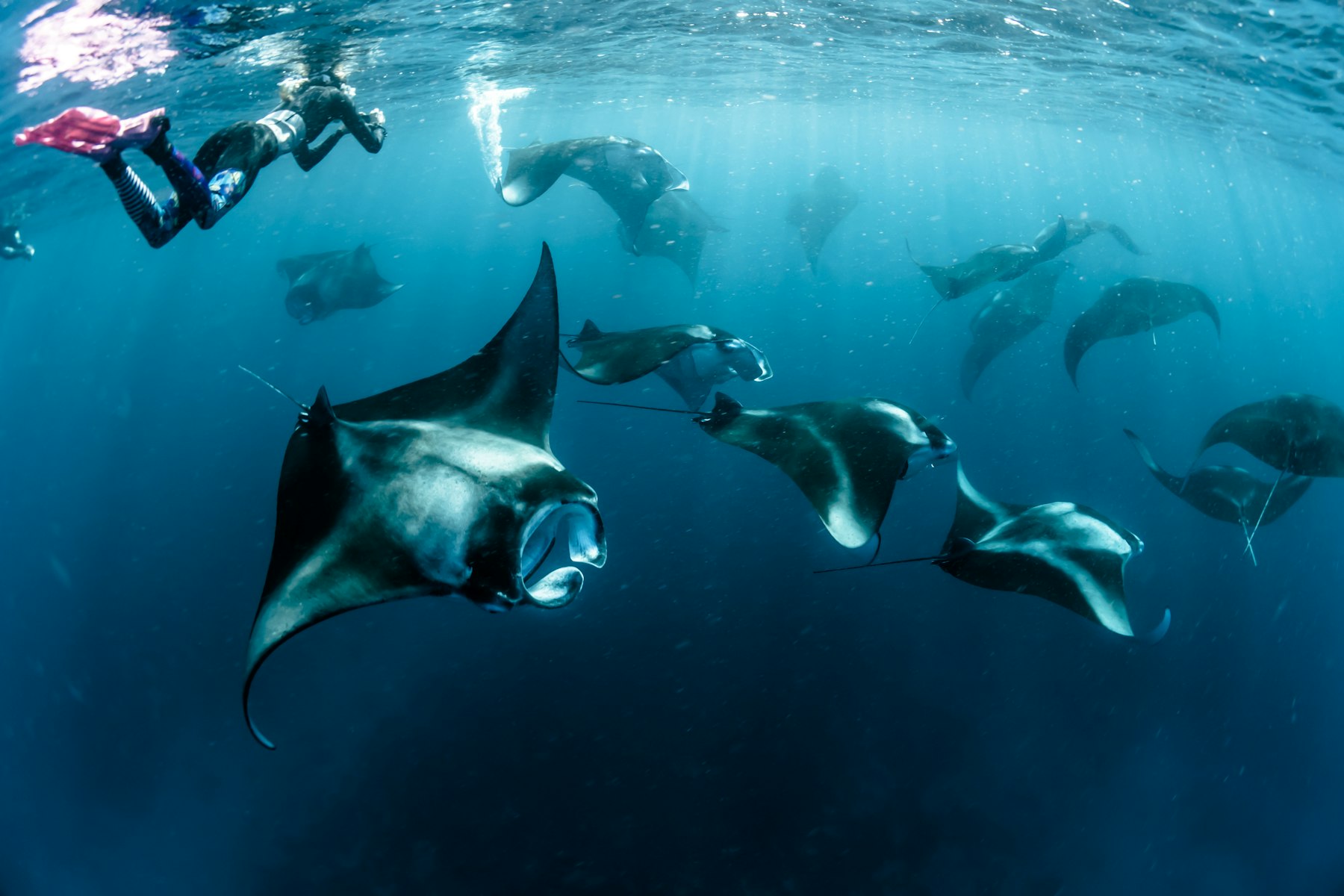
There is a particular sound snorkellers make when they first see it — a muffled shout into the snorkel that nobody else can quite hear. It usually arrives a minute or two after slipping into a small, unremarkable inlet on the eastern rim of Baa Atoll: the moment a wall of manta rays resolves out of the green water and begins to wheel toward you, mouths agape, in numbers that do not look real. Hanifaru Bay is the only place on Earth where this happens on something close to a schedule.
The bay itself is tiny — a dead-end pocket of reef roughly 700 metres long and 200 wide, open to the ocean at a single mouth. For part of every year it becomes the largest known feeding aggregation of reef manta rays anywhere on the planet. The best days on record have drawn counts approaching 250 animals into that one small space, with the occasional endangered whale shark cruising in to join the buffet. Nothing about the setting prepares you for the density — which is exactly why it is worth understanding before you go.
Why the mantas come
Reef mantas — Mobula alfredi, wingspans commonly three to four metres — are filter feeders. They spend their lives straining the thin soup of zooplankton the ocean carries past, and most of the time that soup is too dilute to be worth the effort. Hanifaru works because, for part of the year, the ocean does the concentrating for them.
From roughly May to November the southwest monsoon pushes a steady current and plankton-rich water against this side of the atoll. Twice a month, on the full and new moon, the tides run strong enough to briefly overpower that current and force a slug of oceanic water in through the bay's single mouth. Because Hanifaru is a closed pocket, the incoming tide and the prevailing current collide and spin up a slow back-eddy. The plankton — much of it a single species of copepod — has nowhere to drain, and it piles into a dense, drifting cloud. The mantas read these conditions from a distance and commit only once the soup crosses a measurable richness: researchers have put the tipping point at around 54 milligrams of plankton per cubic metre of water. Below it, the bay stays empty. Above it, the rays pour in.
What follows is one of the ocean's great spectacles, and it escalates. On a modest day the mantas skim the surface in straight lines, or somersault backwards in slow loops to stay parked in the richest water. As more arrive they fall into nose-to-tail formation — chain feeding, each animal's wake funnelling food to the one behind. And when a chain grows long enough that its head catches its own tail, the loop closes into a slowly rotating column: a cyclone feed, a vertical tornado of dozens — sometimes a hundred or more — mantas spiralling through the very cloud they are concentrating. It is rare, it is hypnotic, and there is nowhere else you can reliably watch it happen.
The mantas commit only once the soup crosses a measurable richness — below it, the bay stays empty; above it, they pour in.
A reserve built around a bay
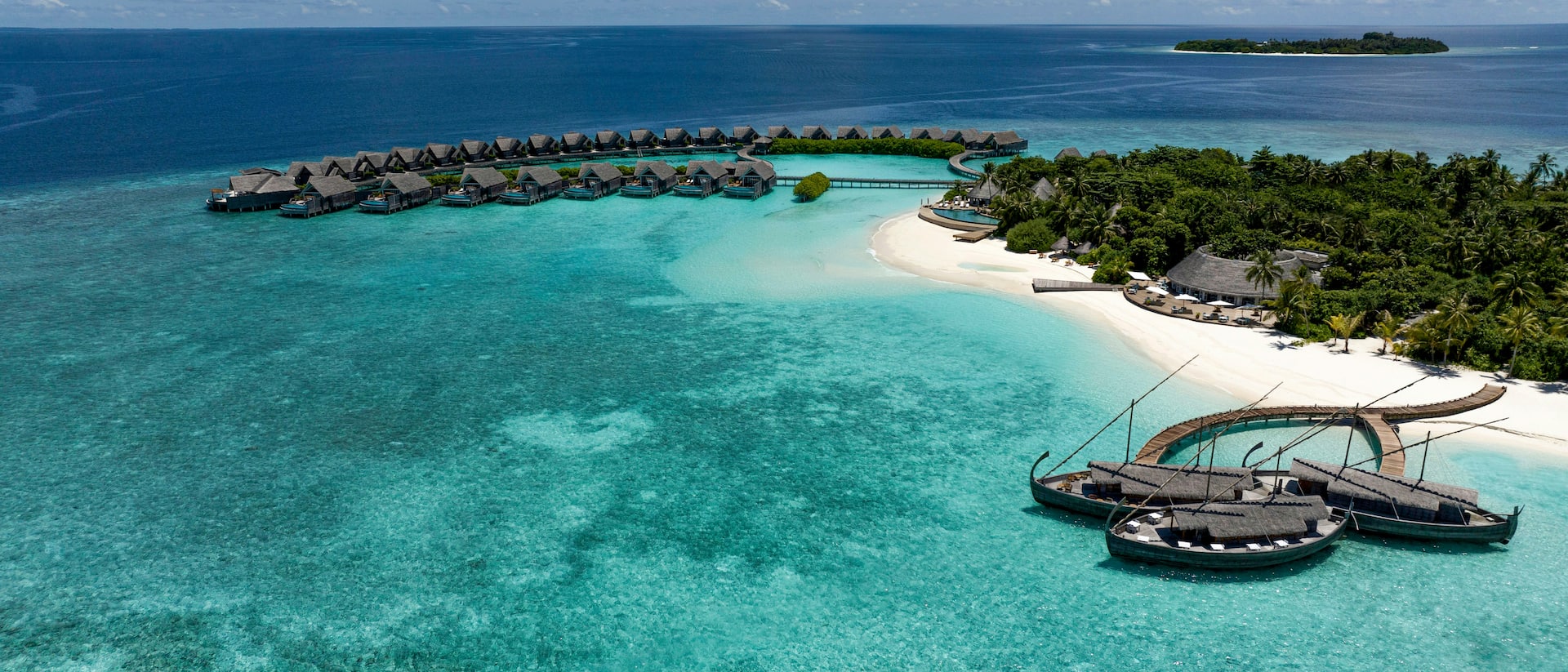
Hanifaru sits inside the first place in the Maldives that UNESCO recognised as a Biosphere Reserve. In June 2011 the whole of Baa Atoll — a ring of around seventy-five islands — was inscribed for the sheer productivity of its reefs, which UNESCO credits with roughly 250 species of coral and 1,200 species of reef fish. The manta and whale shark aggregation was a headline reason for the listing, and the bay itself had already been gazetted as a protected area two years earlier, in 2009.
That status dictates what the bay is allowed to be. By the 2000s, on a good day, up to fourteen boats would jostle for the same patch of water, and the crowding was driving the animals off. A formal management plan took effect in 2012. Scuba was banned outright — partly because exhaust bubbles break up the feeding columns, partly to keep numbers in the water down — so Hanifaru is now snorkel-only. No more than five boats may be inside the bay at once; each visit is capped at around forty-five minutes; a licensed guide may lead no more than ten swimmers; and a per-person token — around US$30, bought at the visitor centre on nearby Dharavandhoo — buys roughly that window in the water and funds the Baa Atoll conservation programme. Rangers enforce all of it from the water.
It sounds clinical. In practice the restraint is exactly what makes the encounter feel ordered rather than chaotic, even in peak weeks — and it is the reason the aggregation still reliably happens at all. The good guides will tell you to hold still and let the mantas come, because a motionless snorkeller is part of the furniture and a thrashing one empties the bay.
The science has a home here
Much of what the world knows about reef mantas was learned in these waters. The Maldives holds the largest documented population on Earth — more than six thousand individuals now catalogued, each identified from the unique pattern of spots on its pale underside, the same way a fingerprint identifies a person. That database, the largest of its kind anywhere, is run by the Manta Trust, a charity founded in 2011 that grew out of a research project started back in 2005 at a Baa Atoll resort, Four Seasons Landaa Giraavaru. Several islands in the atoll still put a resident marine biologist on the excursion boat, which turns a snorkel trip into something closer to a field day — and means the photographs you take can be matched against the catalogue and become a genuine data point. Scientists, for their part, rank Hanifaru and the reef beside it as an Important Shark and Ray Area, a designation that sits a tier above the tourism story.
When to go, and how
The season runs from roughly May to November and concentrates in the heart of it; the strongest, most reliable weeks tend to fall between July and October. Within the season the show is moon-driven, not date-driven — the biggest aggregations cluster around the full and new moons, when the tides run hardest. That single fact is the most common reason visitors miss it: book a fixed week without checking the lunar calendar and you may snorkel an empty bay. The trade-off is honest, too — this is the wetter, windier half of the year, so you swap some dry-season sunshine for the best big-animal encounter in the Indian Ocean.
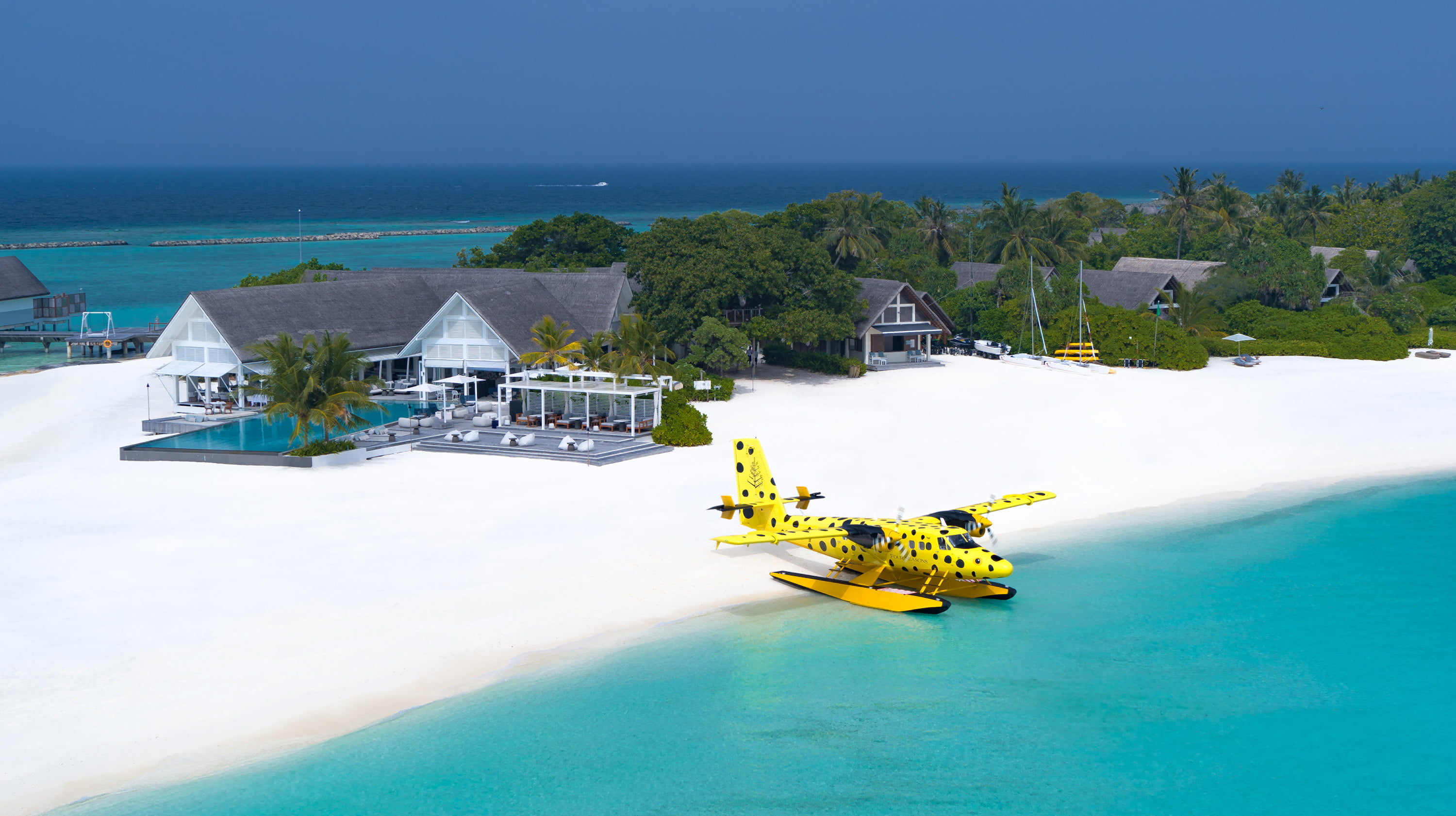
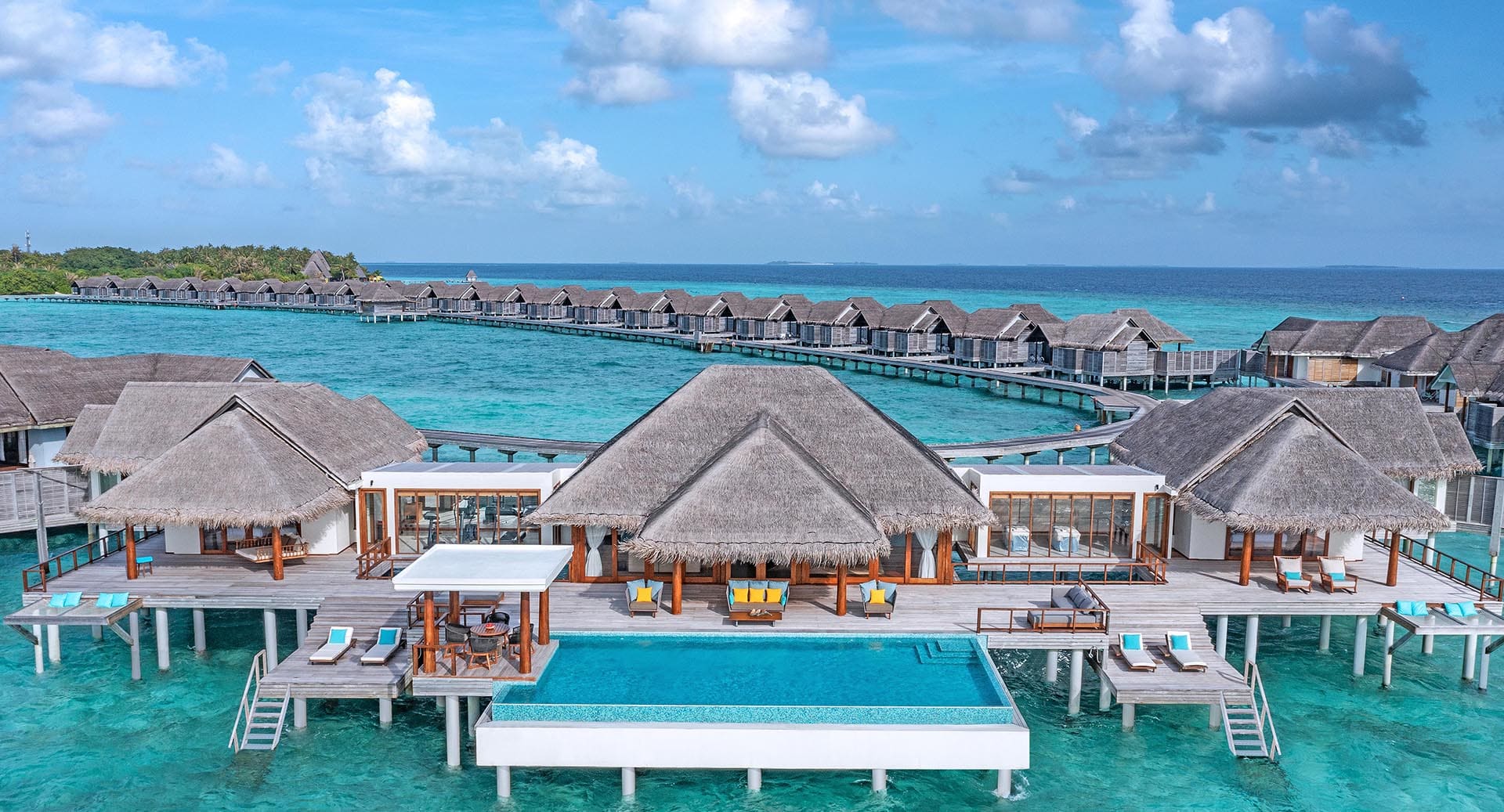
There is no resort on Hanifaru itself, and there never will be; the island is uninhabited and protected. Every visit is a boat excursion, scrambled on a tide window the resort's marine team has been tracking, often at short notice. The closest beds are the central-eastern resorts of the atoll and the guesthouses on Dharavandhoo, whose small domestic airport — opened in 2012 — put the whole reserve within a twenty-minute flight and a short boat ride of Malé. The atoll's resorts skip that hop entirely: most are a direct 30-to-35-minute seaplane from the airport at Malé. Which you choose shapes the cost as much as the journey. The budget route is a Dharavandhoo guesthouse running day-trips, where the excursion typically lands at roughly US$60 to US$100 a head; book a central-eastern resort and the marine team runs the same trip for somewhere around US$150 to US$300, the convenience and the resident biologist priced in. The encounter is free to the mantas and tightly rationed to the rest of us, which is precisely the bargain that keeps it intact.
If you are planning to be in Baa for the season, our full Baa Atoll guide compares every resort on the atoll, the seaplane-versus-Dharavandhoo transfer maths, and which marine teams time the Hanifaru tides best.