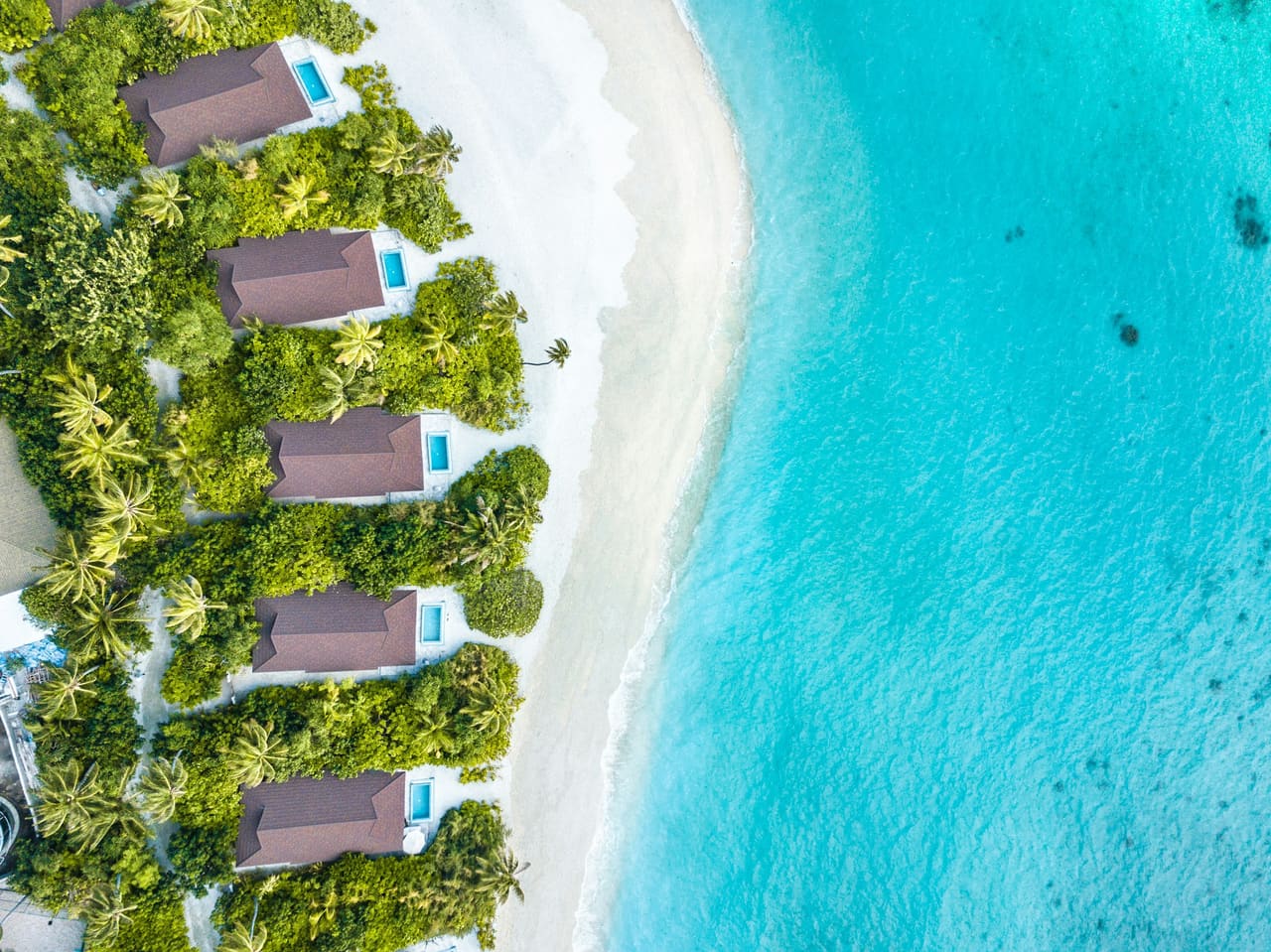
Maldives versus Bali isn't really one comparison — it's two different holidays that happen to both involve palm trees. The Maldives is a high-end aquatic retreat: a thousand-plus islands, most resorts on their own private island, built around a turquoise lagoon, a house reef and an overwater villa. You go to switch off, dive or snorkel with mantas and whale sharks, and pay handsomely for the seclusion. There is very little to "do" on land, and that's the entire point. Bali is the opposite proposition — one large volcanic island you can road-trip across, stacked with temples, rice terraces, a volcano to climb at sunrise, world-class surf, a famous wellness and café scene, nightlife and street food, all at a fraction of the price.
So the honest framing is budget and trip-style, not which is "better."
Where Bali wins
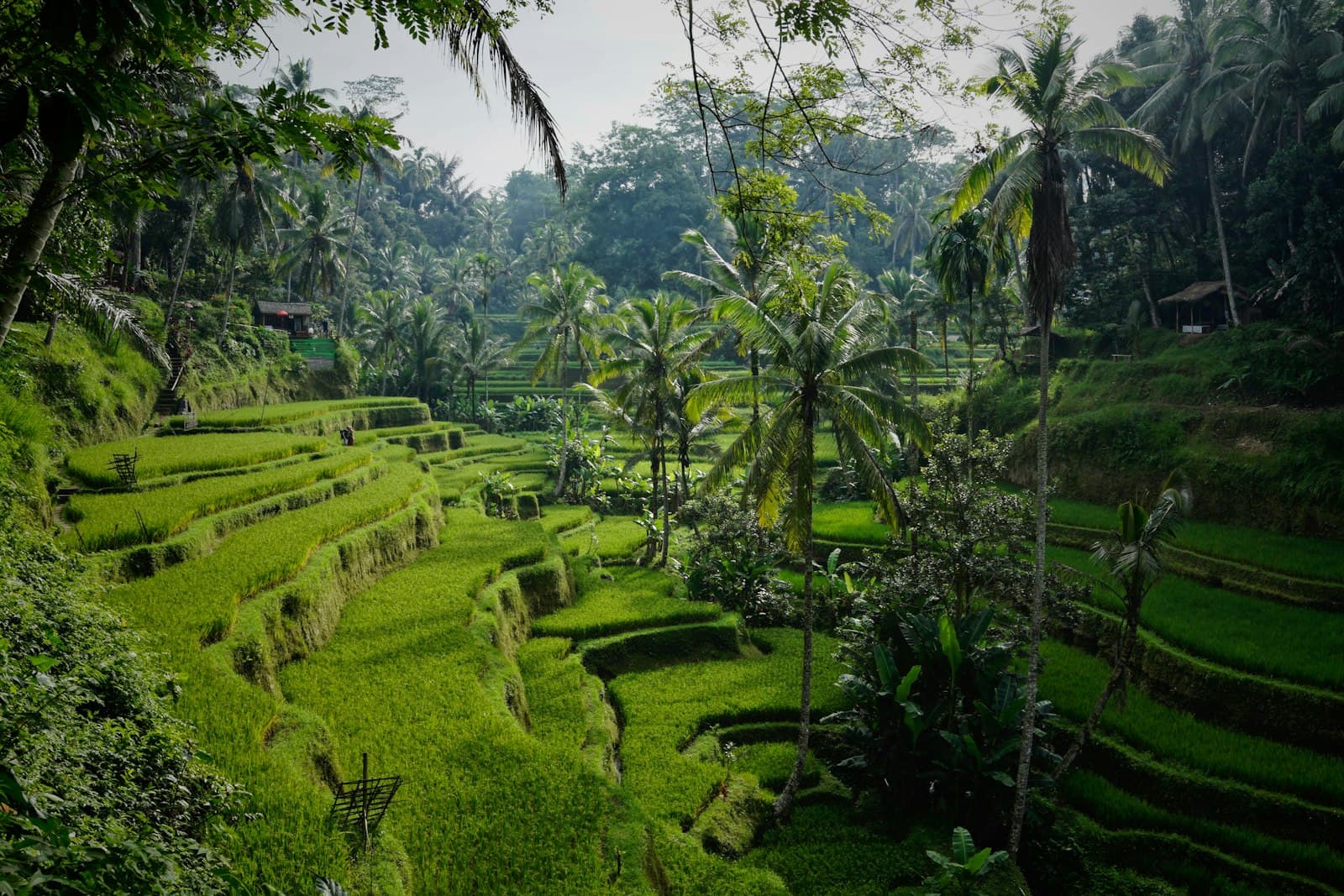
Price, culture, variety and access. Bali runs the full range from $30-a-night homestays to luxury villas, and a comfortable trip costs $50–150 a day where the Maldives is three to five times pricier — everything there is shipped in, with taxes and transfers stacked on top. Bali also has near-infinite things to do: the temples of Uluwatu and Tanah Lot, Ubud's culture and yoga, the Tegallalang rice terraces, a sunrise trek up Mount Batur, waterfalls, surf, beach clubs and cooking classes. And it's far easier to reach — a direct hop of three to six hours from Australia and Asia, then a taxi, versus the Maldives' long-haul flight plus a seaplane or speedboat. For first-timers to Asia, mixed-interest groups, surfers, foodies and anyone who'd get restless on a single resort island, Bali is the call.
The numbers, both sides. In Bali you can sleep for $15–30 a night in a homestay, $50–150 in a comfortable mid-range hotel, or $200-plus in a private-pool villa, and a relaxed week for two — room and meals — often comes in around $1,000–2,000. The Maldives more or less starts where Bali's ceiling is: a local-island guesthouse runs roughly $80–150 a night, while a resort water villa is more like $400–800-plus, before the all-inclusive meal plan and the transfer are stacked on. A typical seven-night resort trip for two, international flights excluded, sits in the region of $5,000–7,000 and climbs well past $13,000 at the top end — which is where the three-to-five-times gap actually comes from.
Where the Maldives wins
Overwater villas, reef life and seclusion. The Maldives holds roughly two-thirds of the world's overwater villas; Bali, whose surf-prone seas can't support them, has essentially none over real ocean — only "water villas" over man-made lagoons. For the classic overwater-villa-over-a-turquoise-lagoon dream, the Maldives is the only real choice. Its beaches win too — calm, shallow, powder-white, undeveloped — where Bali's are more developed, surf-oriented and sometimes grey volcanic sand. Underwater, both are genuinely world-class, but the Maldives delivers it off your deck (year-round whale sharks, hundred-strong manta swarms) where Bali's best diving is a boat ride away at Nusa Penida or the Tulamben wreck.
Getting there is its own deciding factor. Bali is roughly six hours' direct flight from eastern Australia and far less from most of Asia, and once you land you're in a taxi — you can be at your hotel by lunch. The Maldives is a true long-haul, usually with a stop through Singapore, Kuala Lumpur, Colombo or the Gulf, and the journey doesn't end at the airport: most resorts are reached by a short seaplane hop or speedboat ride that adds cost and, for seaplanes, a fixed daylight window — land in Malé after about 4pm and you may overnight near the airport and fly on the next morning. None of it is hard, but it's a half-day of logistics that Bali simply doesn't ask of you.
For a honeymoon, both work — differently. The Maldives is the overwater-villa fantasy: a private deck over the lagoon, your own stretch of reef, dinner brought to the sand, and almost no one else in sight. It's seclusion at a price. Bali offers romance with things to actually do between the lie-ins — a cliff-top temple at sunset, a spa day, a clifftop villa with a pool — and at a fraction of the spend, which lets couples blow the budget on one standout villa rather than spreading it thin. If the photo of the trip is the two of you alone over turquoise water, it's the Maldives; if it's the two of you exploring, it's Bali.
Honeymoon-splurge reef paradise versus affordable adventure island — not better versus worse, just a different trip.
So which should you book?
Choose the Maldives if it's a honeymoon, an anniversary or a dive trip, you want an overwater villa and total seclusion, and the budget can carry it. Choose Bali if you want a do-everything cultural and adventure holiday on a sane budget, you'd get restless on a single resort island, or you're travelling as a group with mixed interests. The seasons run roughly opposite — Bali's dry months are April to October, the Maldives' calm-sea sun is December to April — so let the calendar break a tie. And if you do choose Bali, pay the tourist levy and respect temple dress codes; it's a place feeling real overtourism strain.
On the season, a little more nuance. Bali is at its sunniest from April to October, with July to September the busy peak; the November-to-March wet season brings short, heavy downpours, thinner crowds and lower prices. The Maldives flips it: December to April is the dry, calm-sea window everyone wants, while the wetter southwest monsoon from around May to November is cheaper, comes in passing showers rather than washouts, and happens to be the best stretch for mantas and whale sharks. The practical upshot is simple — if you're tied to a school holiday or a particular month, the weather often decides this for you before budget even gets a say.
A few things people always ask. Can you do both in one trip? Yes — they sit on the same long-haul corridor, so the easiest way is a Maldives stopover en route between Australia or Europe and Bali rather than a quick hop between them, since there's no direct Malé–Denpasar flight (it's a connection of around ten hours). Which is cheaper? Bali, comfortably — usually a third of the Maldives for a like-for-like week. Better beaches and snorkelling? The Maldives, for calm powder-white sand and reef straight off the beach; Bali's strength is surf and the life beyond the shoreline. And how far apart are they? Roughly 3,000 kilometres of Indian Ocean — close enough to pair, far enough that you'll want a real flight between them.
If the overwater villa is non-negotiable, our best Maldives resorts guide ranks the islands across reef, romance, value and family — the picks worth the splurge.