At the very bottom of the Maldives, just south of the equator, sits an island that spent thirty-five years as one of the most strategically useful scraps of land in the Indian Ocean — and that almost nobody associates with the country at all. Gan, in Addu Atoll, was a secret British naval base in the Second World War and a Royal Air Force station through the Cold War, and the story it left behind is the strangest in the Maldives: a hidden fleet, a near-disaster, and a breakaway republic that lasted four years.
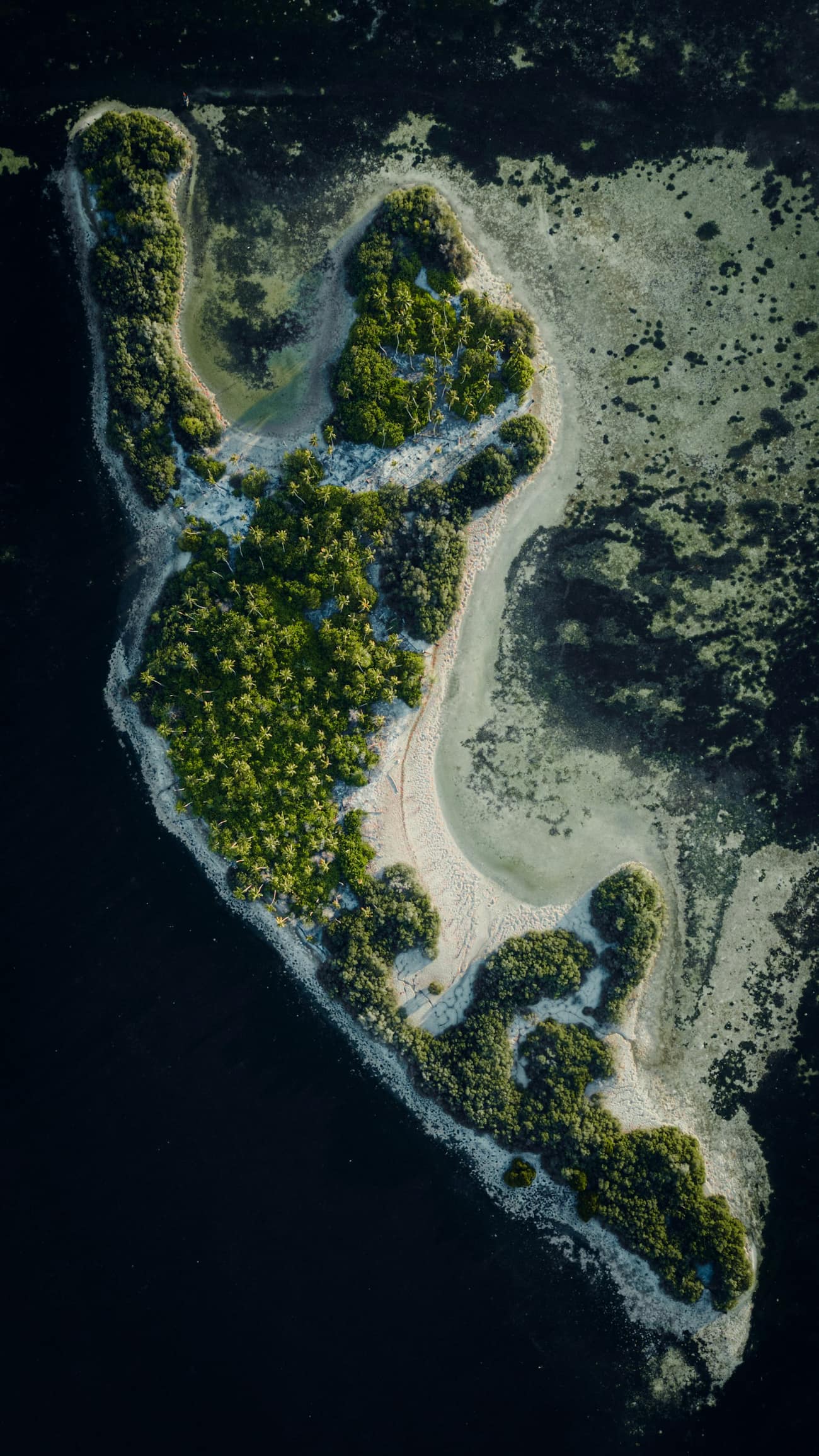
The reason was pure geography. Addu is the southernmost atoll in the country, a ring of coral islets enclosing a deep, sheltered lagoon big enough to hide a fleet — sitting astride the ocean highways between the Gulf, India and the approaches to Singapore and Australia. Twice, a generation apart, Britain looked at that lagoon and that flat low land and saw exactly what it needed.
A Scapa Flow with palm trees
The first time was 1941. With Singapore about to fall, the Royal Navy needed a hidden refuge for its Eastern Fleet, and in August it began secretly building a fuelling anchorage in Addu lagoon, code-named Port T. Admiral James Somerville called it "a Scapa Flow with palm trees," and its single greatest asset was that the enemy did not know it existed. That secrecy was nearly the whole story of April 1942, when a Japanese carrier force swept into the Indian Ocean and struck Colombo and Trincomalee. Somerville withdrew his fleet to Port T — and the Japanese, who never located the base, sailed home without finding it. The official histories tend to tell this as a clever British move; it is more honest to say the fleet was lucky, and that the secret lagoon, not brilliant tactics, is what saved it.
The Cold War runway
The second time was the 1950s. Losing its airfields in newly independent Ceylon, Britain needed a friendly runway on the long air route east, and in 1957 the RAF took over Gan and began building in earnest — a workforce of around twelve hundred Pakistani, Maldivian and British labourers laid the runway and the camps. For the next two decades RAF Gan was a Cold War staging post, a refuelling stop for the bombers, fighters and trooping flights shuttling between Britain and Singapore, several hundred personnel marooned on a tropical full stop at the end of the empire's longest air corridor.
Its single greatest asset was that the enemy did not know it existed.
It did not last. When Britain withdrew its forces from "east of Suez," Gan lost its purpose; the final RAF flight lifted off on 29 March 1976, and the island was formally handed back to the Maldivian government three days later. The base had outlived the empire it was built to serve by barely a decade.
The republic the base built
The most remarkable legacy is political. The British presence had made Addu prosperous and outward-looking — its people had wages, English and medical care that the distant capital, Malé, could not match — so when Malé imposed new taxes affecting the base economy in 1959, the south revolted. Addu, Huvadhu and Fuvahmulah seceded as the United Suvadive Republic, led by Abdullah Afeef, an English-speaking translator who had worked for the British at Gan. For four years a breakaway state existed in the southern Maldives, tolerated by a Britain that valued the base. When Britain finally withdrew its support in 1963, the republic collapsed and Afeef was flown into exile in the Seychelles, never to return. It remains a raw and contested memory in the Maldives — less a tale of British-engineered separatism than of a region that had simply grown richer than its own capital.
What's left to see
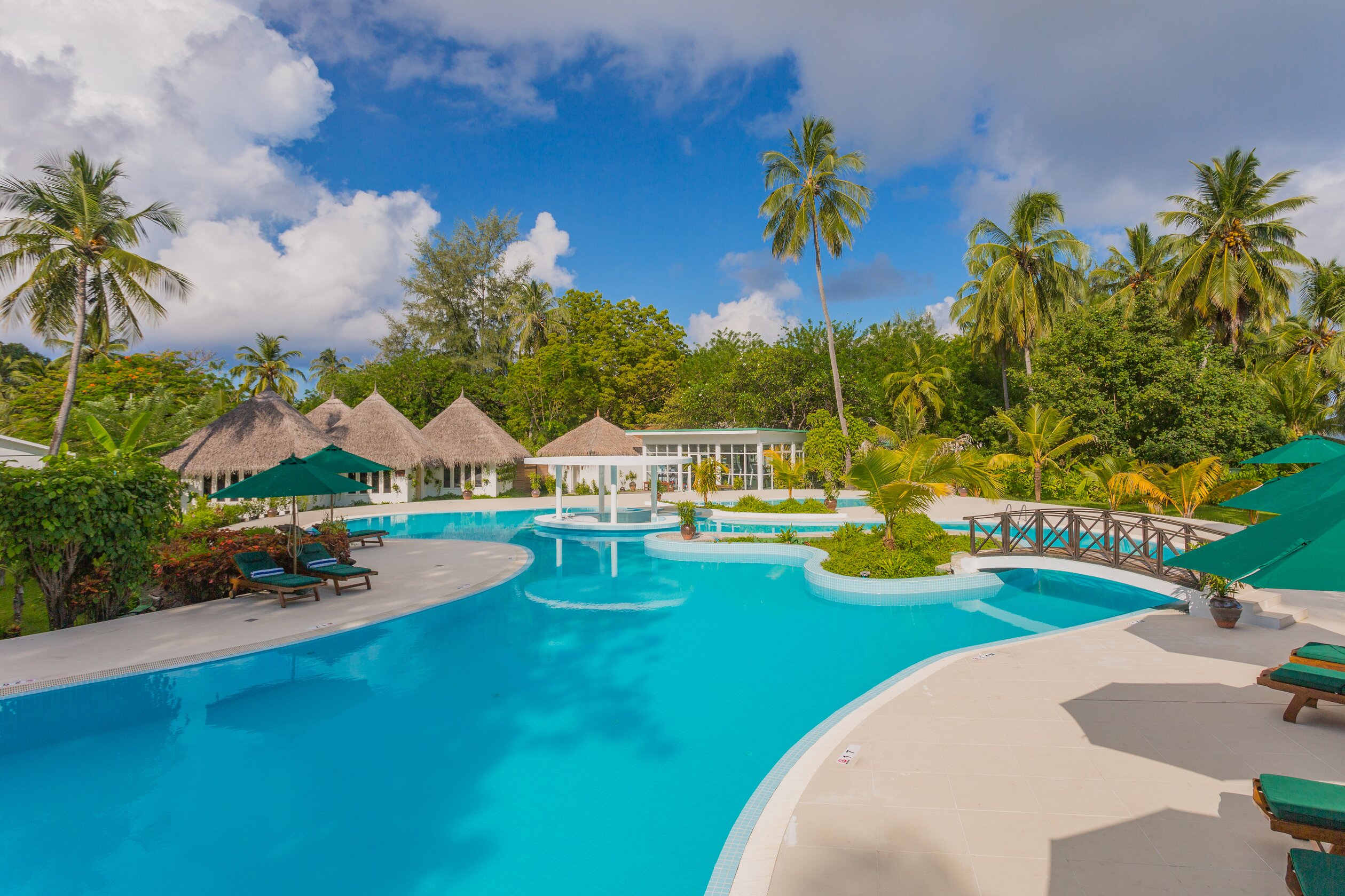
Gan today is reached by a domestic flight of around ninety minutes from Malé to Gan International Airport — built on the old RAF runway — or, for those skipping the capital, a direct SriLankan Airlines hop from Colombo. The history is unusually tangible. The resort Equator Village occupies the former RAF Sergeants' Mess, single-storey colonial blocks set among English-style flower gardens, and still serves afternoon tea and scones at four o'clock, a small surviving ritual of mess life. From there you can cycle the British-built causeways that thread Gan to the other Addu islands — a rare stretch of joined-up land in an island nation — and divers can drop on the British Loyalty, a wartime tanker torpedoed and scuttled in the lagoon and now, at around 33 metres, the largest wreck dive in the Maldives. The empire is gone; the runway, the gardens and the wreck remain.
Addu is the Maldives' deep south, and a different country from the resort belt up north. Our Addu Atoll guide covers getting there, the dive sites and where to stay among the history.